
LGBT+ Northern Lights Holidays: Lapland, Tromsø or Iceland?
LGBT+ Northern Lights Holidays: Lapland, Tromsø or Iceland?
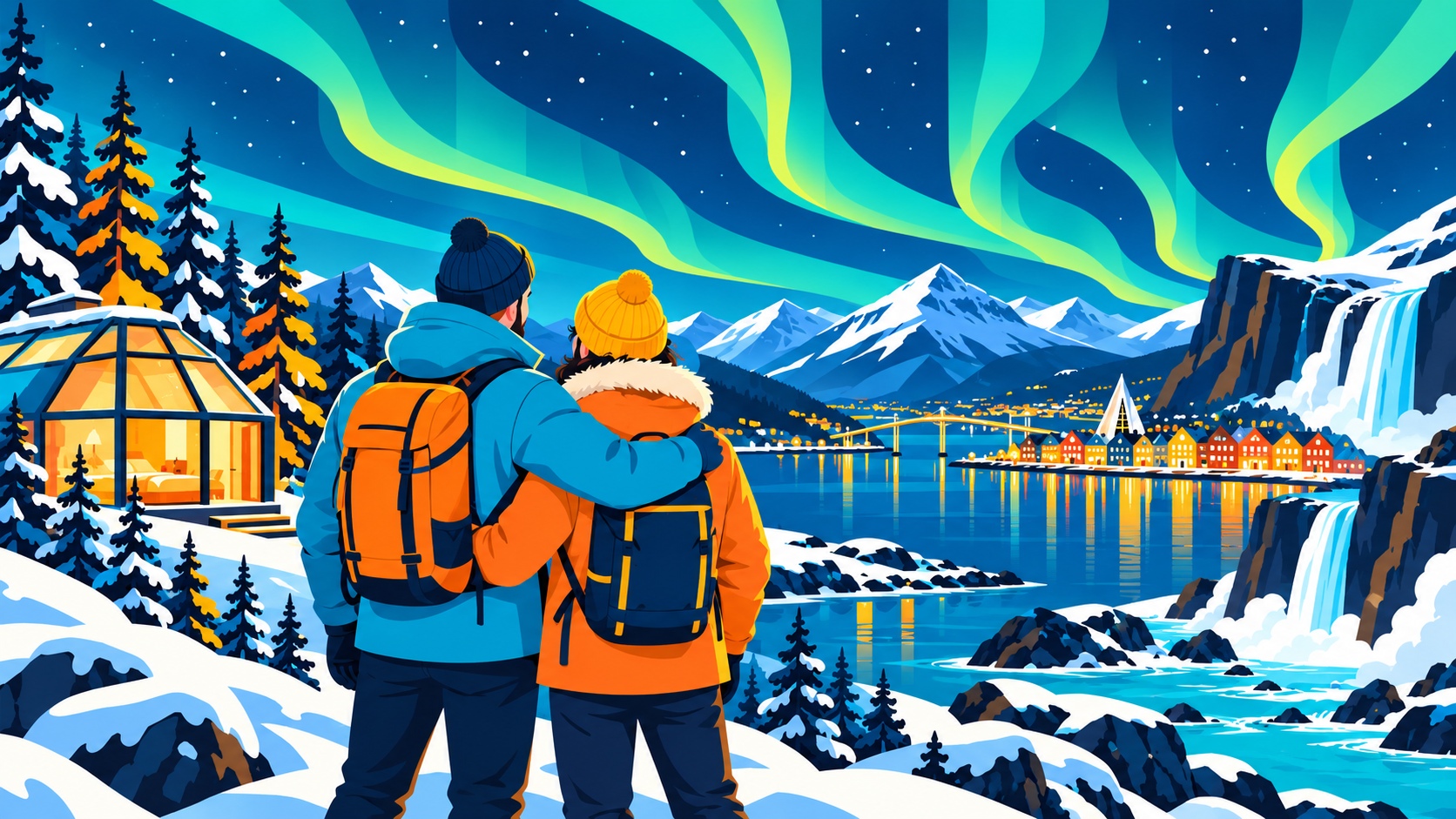
Are you imagining the Northern Lights above a snow-covered cabin, a Norwegian fjord or Iceland's volcanic landscape? LGBT+ Northern Lights holidays offer all three, but choosing where to go involves more than picking the prettiest photograph. The weather, location of your hotel, type of excursion and atmosphere you want from the trip all make a difference.
At Wide Awake Holidays, we think the right choice is the one you would still enjoy if clouds hid the aurora throughout your stay. This guide compares Finnish Lapland, Tromsø and Iceland, with practical advice on viewing conditions, costs, UK travel planning and what genuinely welcoming arrangements can mean for LGBT+ travellers.
LGBT+ Northern Lights Holidays: Which Destination Suits You?
Choose Finnish Lapland if you dream of quiet forests, deep snow, saunas and a romantic cabin. Consider Tromsø if you want an Arctic city, restaurants, fjords and the option of guided excursions that travel to wherever skies look clearest. Pick Iceland if the Northern Lights are part of a bigger holiday involving waterfalls, geothermal bathing, glaciers and varied landscapes.
None is a guaranteed winner for sightings. Aurora activity matters, but clouds can conceal a spectacular display, and local weather may be very different from one valley or stretch of coast to another. A well-planned holiday balances suitable viewing opportunities with experiences you genuinely want during daylight.
| Destination | Best suited to | Aurora viewing approach | Winter daylight and conditions | Accommodation and stay | Main trade-off |
|---|---|---|---|---|---|
| Finnish Lapland | Romantic cabin stays; snow activities; quiet escapes | Fixed dark-sky lodge or guided excursion; compare Rovaniemi, Levi, Saariselkä and Inari | Very cold inland winter; little daylight in December; far north can have polar night | Glass-roof cabins, wilderness lodges, resort hotels; often 4–6 nights | Long transfers or limited nearby dining at remote properties; glass roofs do not guarantee sightings |
| Tromsø, Norway | Arctic city atmosphere; fjords; guided aurora chases | Mobile tours can seek clearer skies, sometimes travelling far inland | Polar night roughly late November–mid January, but daytime twilight; coastal cloud; winter city average about -4°C | City-centre hotels or fjord lodges; often 4–5 nights | Late/long excursions; tour extras; cloud and travel times |
| Iceland | Geothermal bathing; waterfalls; touring; mixed scenery | City-based excursions, countryside stays, or flexible guided touring | Winter lowlands often fluctuate near freezing; wind and rapidly changing weather; shorter winter daylight | Reykjavík hotels, countryside hotels and combined stays; often 5–7 nights | Weather-sensitive roads and sightseeing; transfers and tours add to cost |
If you would like a broader introduction to Nordic destinations, our LGBT+ travel guide to Scandinavia explores the region's holiday styles and social context. Here we are concentrating on choosing a specific Northern Lights break rather than touring the whole region.
Finnish Lapland: snowy forests and romantic Arctic cabins
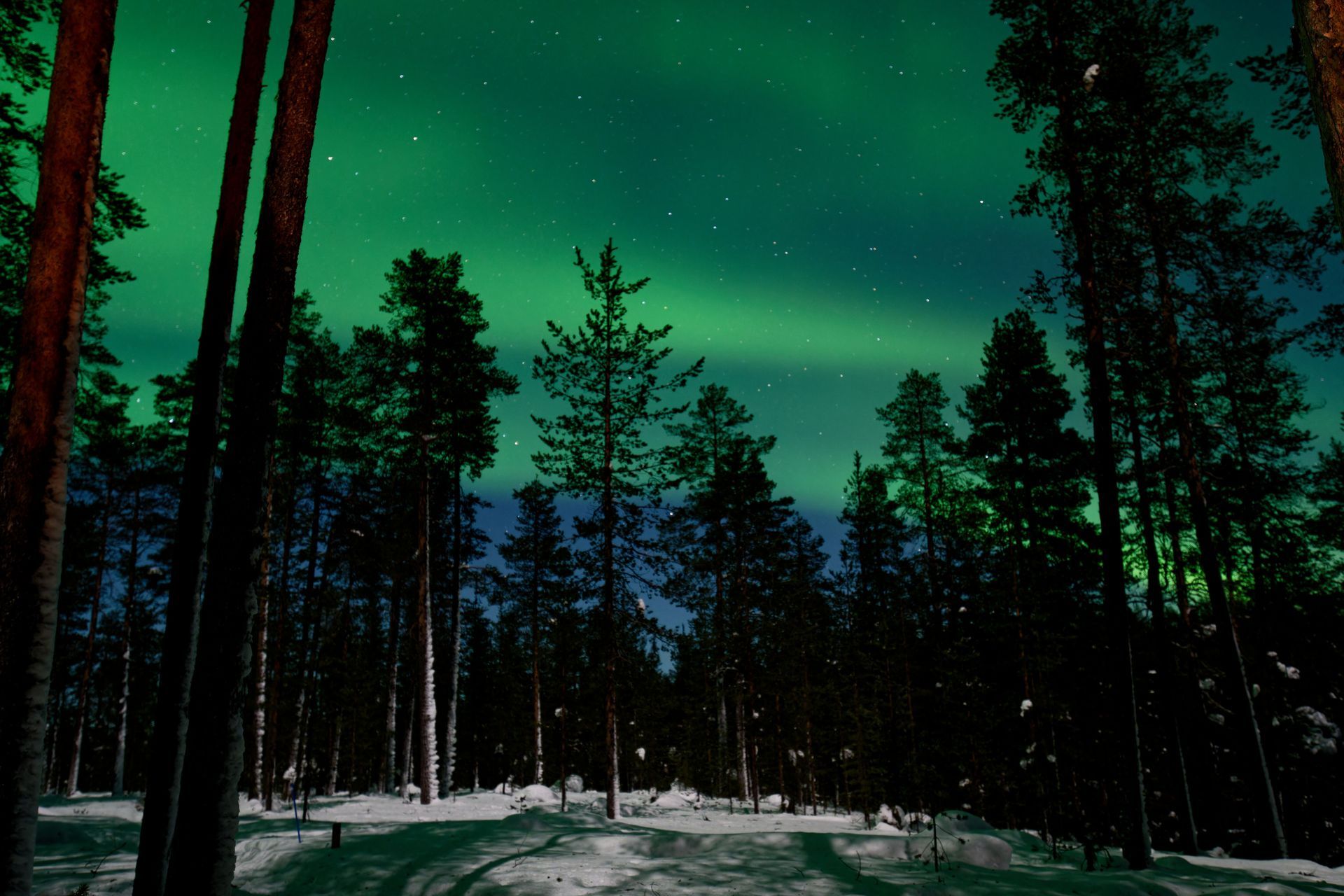
Finnish Lapland is the classic winter postcard: pine trees under heavy snow, frozen lakes, husky sleds and cabins with warm lights in the windows. It is a particularly attractive option for couples seeking privacy, friends who enjoy outdoor activities and travellers who want winter itself to be the main event.
The word Lapland covers a large region, so choosing the base matters. Rovaniemi has an airport, more services and well-known festive attractions. Levi is a lively winter resort with skiing, restaurants and activities. Saariselkä offers access to quieter Arctic scenery, while Inari and other far-northern locations can appeal to people prioritising remoteness and darker surroundings.
Where in Finnish Lapland should you stay?
Choosing Finnish Lapland is only the first decision. Rovaniemi, Levi, Saariselkä and Inari offer quite different experiences, and the right base can matter as much as the accommodation itself.
Rovaniemi suits first-time visitors wanting convenient access to organised winter activities, restaurants and festive attractions. It is a practical starting point for a short break, especially when a traveller wants to combine several experiences without moving hotels. You will generally need to travel away from the brighter parts of town for better dark-sky viewing.
Levi suits travellers who prefer a winter resort with skiing, restaurants and more opportunities to be sociable. It can work particularly well for groups of friends or couples who want both outdoor activities and the convenience of resort facilities.
Saariselkä is a strong choice for travellers prioritising quieter surroundings, fell scenery and easy access to northern wilderness. Accommodation ranges from resort-style hotels to secluded cabins. Check whether your chosen property is within walking distance of services or requires organised transfers.
Inari and the surrounding northern wilderness appeal to travellers who place natural surroundings and peaceful accommodation above nightlife or shopping. The region also offers opportunities to learn about Sámi culture. Greater remoteness requires more careful planning around transfers, meals, excursions and the availability of medical or other services.
For those travelling through Ivalo Airport, Saariselkä and Inari may be more practical than assuming every Lapland itinerary should begin in Rovaniemi.
The best base is not automatically the furthest north. Consider how you will spend the day, whether you want a private cabin or a full-service hotel, and how easily you can reach suitable viewing locations after dark.
Glass igloos and Arctic hotels: what are you actually booking?
Some properties are designed around watching the sky from your accommodation. Others concentrate on activities, spa facilities or convenient access to excursions.
For example, Apukka Resort near Rovaniemi combines sky-view accommodation with winter activities and restaurants. It may appeal to travellers wanting the atmosphere of a Lapland cabin without being entirely removed from organised experiences.
Gáldu Hotel & Spa near Saariselkä offers a different proposition, combining boutique accommodation, forest spa facilities and rooms designed to frame the night sky. Its appeal lies as much in the accommodation experience as in the possibility of an aurora sighting.
These are examples of different Arctic hotel styles, not automatic recommendations or verified LGBT+ endorsements. Room arrangements, facilities, inclusivity policies, current rates and availability should all be checked before making a recommendation.
A glass roof does not guarantee a Northern Lights display. Ask whether the view faces a useful part of the sky, how much artificial light surrounds the property and whether the accommodation offers an aurora alert service.
What makes Lapland different?
Glass-roof cabins and igloos have become a signature accommodation choice, but they are not the only option. A comfortable lodge with a traditional sauna and a guided night-time outing may be better value than paying a premium for one roof panel. Trees, buildings, weather and the direction of the sky all influence what you can see from bed.
For daytime activities, consider snowshoeing, cross-country skiing, husky experiences, reindeer visits or a gentle scenic outing. Ask about animal welfare practices, how long you will be outdoors and whether thermal suits are supplied. Some activities involve sitting still in extremely low temperatures, which can feel colder than active walking.
Lapland also comes with trade-offs. Winter temperatures can be demanding, and remote accommodation may involve a long transfer or limited nearby dining. Restaurants and nightlife vary substantially between resorts. If you want to wander into town for a spontaneous evening, select your accommodation on that basis rather than assuming every wilderness lodge provides the same convenience.
For LGBT+ couples, a private cabin can offer welcome peace, but seclusion alone is not evidence of inclusive hospitality. Confirm the actual room configuration, the staff's approach to couples and any particular requirements before booking.
Tromsø, Norway: an Arctic city with aurora-chasing options
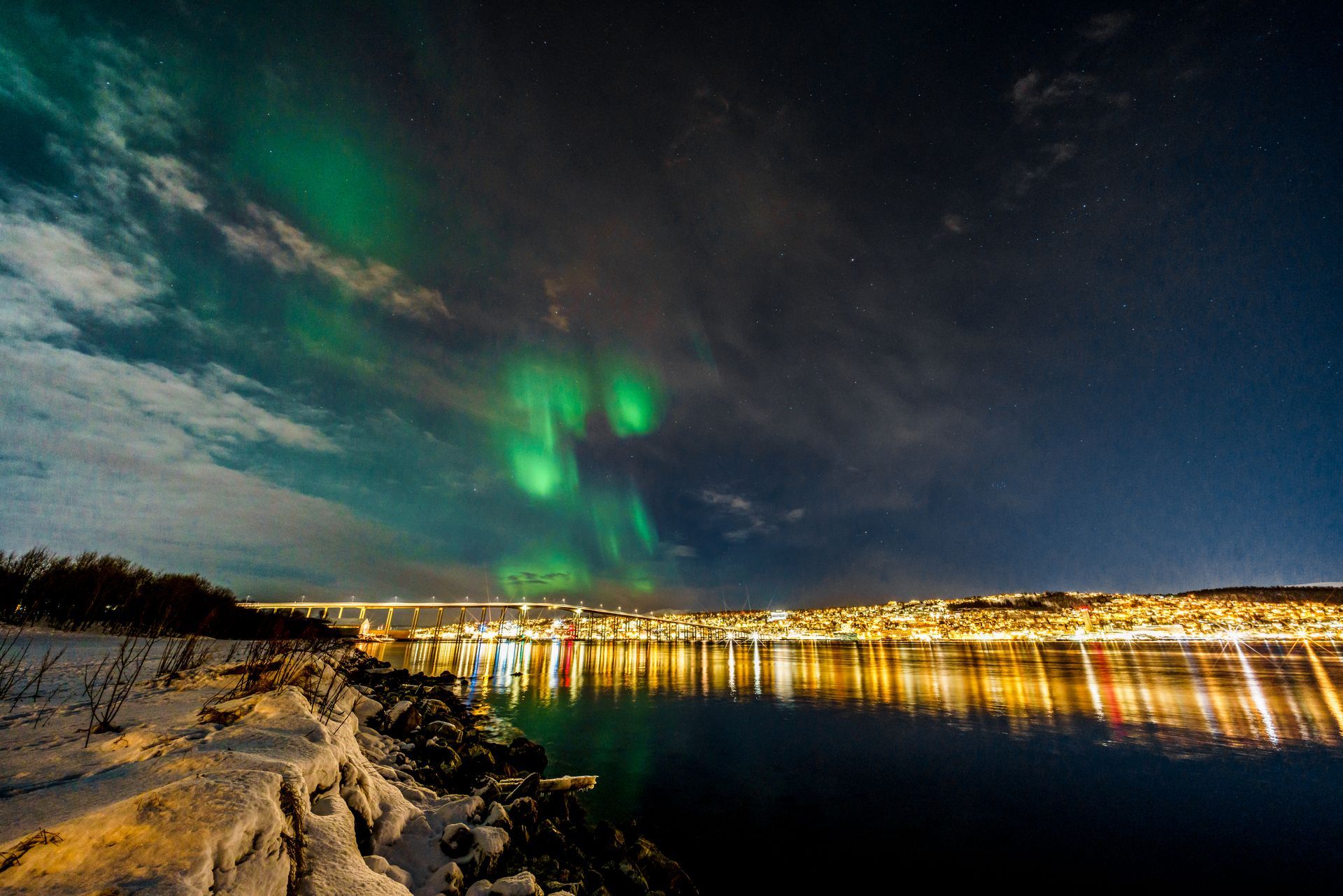
Tromsø offers a different balance. It is an established northern Norwegian city surrounded by mountains, islands and fjords. You can base yourself near restaurants, museums and a waterfront, then head out after dark with a specialist guide. That is appealing if you want interesting evenings even when there is no aurora to watch.
Tromsø lies within a favourable part of the auroral zone, but its coastal position brings variable cloud and weather. On some nights a display may be visible from the city. At other times, a guide may need to drive inland, sometimes a considerable distance, to search for gaps in the cloud.
Northern Lights chase or Arctic experience: which should you book?
There are two broad types of evening excursion in Tromsø, and understanding the difference is essential.
A Northern Lights chase focuses on seeking clear skies. Guides use local weather information to choose viewing locations and may drive inland or across considerable distances. Visit Tromsø notes that some chases can last up to ten hours. These trips may offer greater flexibility when cloud covers the city, but they can involve long journeys, late returns and time standing outdoors in low temperatures.
A Northern Lights experience combines the possibility of seeing the aurora with a planned activity. You might spend the evening at a wilderness camp, enjoy a meal by a fire or take part in another Arctic experience. The activity gives the evening a purpose even if the lights do not appear, but a fixed-location operator may have less flexibility to escape cloud.
Neither option guarantees a sighting.
Before booking, ask about thermal clothing, food, toilets, the maximum tour duration, photography, pick-up locations and what happens if the weather is unsuitable.
Cancellation and retry policies differ. One provider might cancel before departure and offer a refund. Another may operate in cloudy weather and provide no refund if the aurora remains invisible. Some offer discounted second attempts, subject to availability.
Certain mobile tours can cross into Finland. When that is possible, the operator may require travellers to carry a valid passport.
For couples seeking privacy, a private excursion may be attractive. A small-group trip can be more affordable and sociable, while a larger coach may offer more seating space, heating and toilet facilities. The best option depends on comfort and individual requirements, not simply the number of participants.
Tromsø suits travellers who like a city base and guided experiences more than isolation. It is not a major gay nightlife destination, though that need not matter if your main pleasure is sharing the Arctic landscape with a partner or friends. For more ideas about winter trips beyond one country, see our winter getaways for LGBT+ travellers.
City hotel or fjord retreat?
Staying in central Tromsø gives you restaurants, shops, museums and convenient departure points for many excursions. Clarion Hotel The Edge, for example, occupies a waterfront position with restaurant and bar facilities. It illustrates the convenience of choosing an established city hotel rather than an isolated Arctic cabin.
A remote fjord lodge creates a different atmosphere. Travellers may enjoy quieter surroundings and darker skies, but should consider transfer costs, restaurant availability and how an evening excursion fits around the journey back.
An urban hotel is not necessarily worse for Northern Lights viewing. If your plan involves mobile excursions, the ability to reach tour departure points easily may be more important than having a dark sky immediately outside your room.
Likewise, a rural hotel is not automatically the most romantic choice if reaching it adds several tiring hours to your holiday.
As with all accommodation examples, confirm actual room arrangements, accessibility and LGBT+ inclusivity before recommending a specific property.
Iceland: Northern Lights plus waterfalls, glaciers and geothermal water
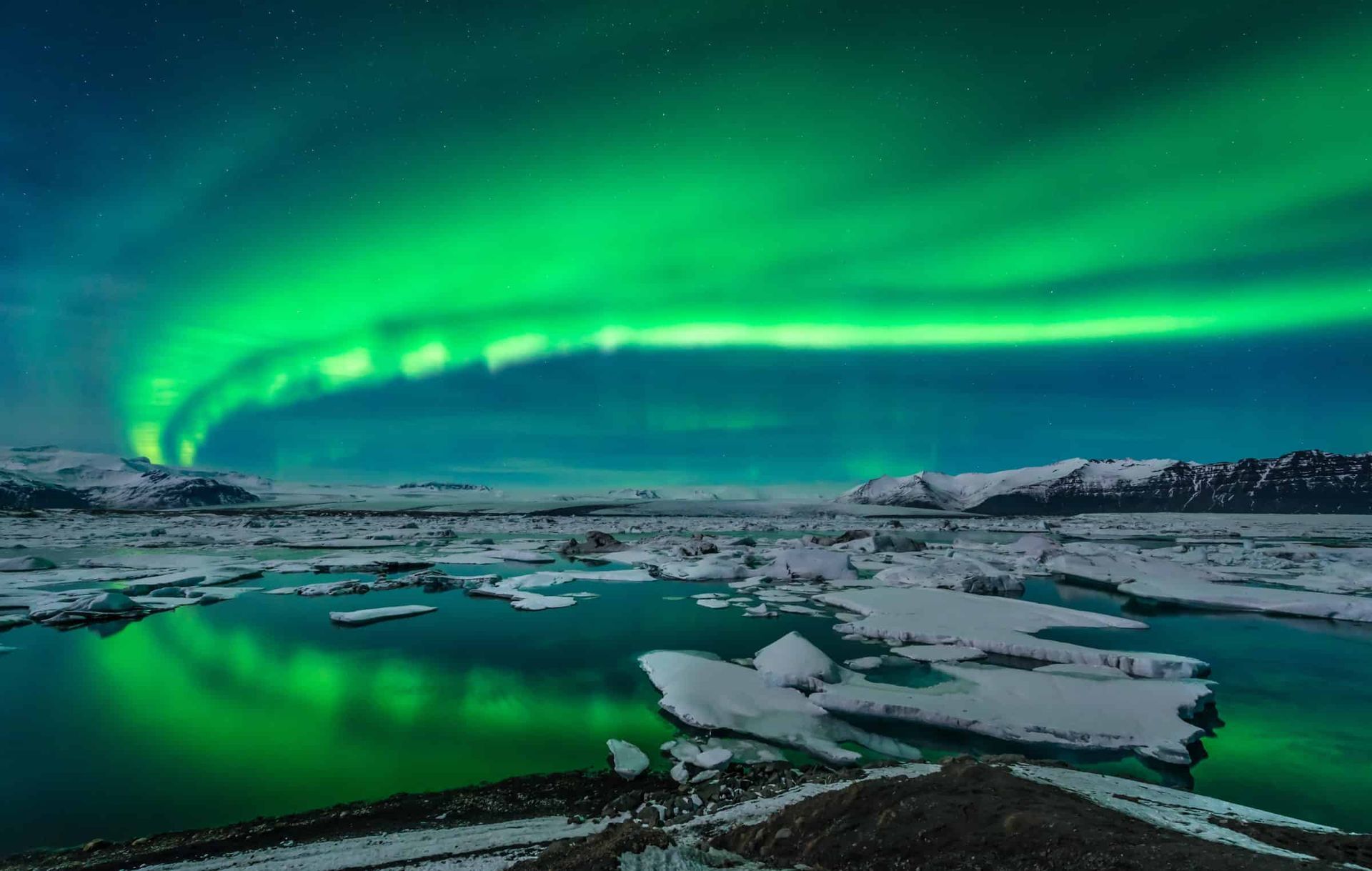
Iceland makes a strong case when you want the aurora as one part of a varied itinerary. Reykjavík provides hotels, cafés, restaurants and a visible LGBT+ community. From there, organised trips can introduce you to geothermal areas, waterfalls and dramatic volcanic scenery, even if the skies are too cloudy for aurora viewing.
A longer trip might combine Reykjavík with the South Coast or a rural hotel. Outside urban areas, lower artificial light levels may help, though remote location alone cannot solve a cloudy forecast. Winter touring requires thoughtful timing because daylight is limited and journeys can be disrupted by wind, ice or snow.
Where should you stay in Iceland for the Northern Lights?
Reykjavík is a sensible base for first-time visitors who want restaurants, museums, geothermal experiences and organised day trips. The Northern Lights can sometimes be visible from the city, but artificial lighting can make weaker displays harder to see. A guided evening excursion may take you to darker surroundings.
The Golden Circle and South Iceland suit travellers wanting a combination of aurora opportunities and major natural attractions. The Golden Circle includes Þingvellir, the Geysir geothermal area and Gullfoss waterfall. South Iceland also provides access to dramatic coastline, waterfalls and glacier excursions, subject to weather and safety conditions.
A countryside hotel can reduce the need to travel after dark, but do not assume that rural accommodation has better weather on every evening.
North Iceland, including Akureyri and the Lake Mývatn region, offers another type of winter holiday, with geothermal landscapes and darker surroundings outside populated areas. Travel arrangements can be more involved, particularly when weather affects roads or domestic transport.
For most first-time visitors, Reykjavík combined with a carefully chosen countryside stay is easier to plan than attempting an extensive winter circuit of Iceland.
Winter road conditions can change quickly. In particular, the Icelandic Highlands should not be treated as an ordinary winter self-drive destination.
A countryside hotel with an aurora alert
Hotel Rangá in South Iceland provides an example of accommodation designed with aurora watching in mind. Its facilities include an aurora wake-up service, outdoor hot tubs and an observatory.
The practical advantage is the ability to be alerted to potential sightings rather than checking the sky throughout the night.
However, a wake-up service cannot guarantee clear skies or an aurora display. A hotel's facilities and location are also separate questions from whether its service arrangements meet an individual LGBT+ traveller's expectations.
City base, countryside stay or guided touring?
A Reykjavík base is convenient for travellers who prefer restaurants, familiar hotel facilities and guided excursions instead of driving. A rural stay can provide a quieter atmosphere, easier access to dark surroundings and a feeling of being immersed in the landscape. A combined itinerary may offer the best of both, but moving hotels uses time and adds transport arrangements.
A Northern Lights tour that can be moved or repeated, subject to the operator's terms, may suit someone whose dates are flexible. Do not mistake a tour's rebooking policy for a promise that the aurora will appear. Check pick-up points and how weather cancellations are handled.
Iceland is especially attractive for romantic trips where soaking in warm geothermal water, enjoying a carefully chosen restaurant or visiting a glacier is part of the appeal. Some popular geothermal areas can have access restrictions or disrupted operations, so check conditions close to travel. Our existing LGBT+ adventures in Iceland guide explores the wider destination in more detail.
For independent travellers, hiring a car may sound tempting, but winter driving is not simply summer driving with snow. Road closures, strong winds and rapidly changing visibility can make organised transport the more enjoyable choice. Avoid building a rigid daily schedule that depends on every road remaining open.
How LGBT+-friendly are Lapland, Tromsø and Iceland?
Same-sex marriage has been recognised in Norway since 2009, Iceland since 2010 and Finland since 2017. All three countries have important protections against discrimination, including in employment, although the exact legal rules on sexual orientation, gender identity and gender expression differ. These protections are encouraging, but they do not guarantee how every individual hotel or tour guide will behave.
Reykjavík has a visible LGBT+ community and events. Tromsø offers city amenities without a large dedicated gay scene. Finnish Lapland ranges from busy resorts to isolated lodges. Holding hands or sharing a room should not be treated as a special request, but social reactions can vary anywhere. Check the actual accommodation and excursion arrangements rather than assuming a national reputation applies to every supplier.
What do LGBT+ travellers actually experience in each destination?
All three countries recognise same-sex marriage and have established legal protections, but the character of an LGBT+ holiday differs.
Iceland offers the most visible established LGBT+ scene of these particular holiday bases through Reykjavík. Travellers can combine nature-focused days with a city that has a recognised queer community, cultural events and opportunities to socialise. Outside Reykjavík, the emphasis usually shifts towards individual accommodation and nature experiences rather than LGBT+-specific nightlife.
Tromsø offers an Arctic city atmosphere, restaurants and cultural attractions. It should not be confused with a large gay city-break destination. The available social scene and the suitability of individual venues should be checked for the travel dates, especially if meeting other LGBT+ people is a priority.
Finnish Lapland varies greatly between resorts. Rovaniemi has a visible LGBT+ community presence through Arctic Pride, which has been held there since 2013. Remote wilderness accommodation can provide valuable privacy, but may have fewer social opportunities, services and nearby places to visit.
The 2026 ILGA-Europe Rainbow Map places Iceland, Finland and Norway among Europe's stronger countries for assessed LGBT+ legal and policy protections. These scores do not measure individual visitor experiences or certify particular hotels.
For most travellers, the more useful question is not simply whether a country is LGBT+-friendly, but whether the chosen accommodation, excursions and local arrangements support the holiday they want.
What should you ask an accommodation provider?
Start with the simple details you know will matter. If you are a same-sex couple, can you reserve the bed type you actually want and have it confirmed rather than left as a request? If you are celebrating a honeymoon, will the hotel handle it naturally? If discretion is important, does the property have a suitable private setting without isolating you from transport and services?
Travellers who are trans or non-binary may also want information on how names and pronouns are handled in daily interactions, the privacy of spa changing facilities and which legal details must appear on transport documents. Travel documents should follow the supplier's rules, but ordinary hospitality should still respect how a guest wishes to be addressed.
No one should have to disclose personal information unnecessarily to arrange a holiday. Equally, a rainbow badge or a vague declaration of being welcoming should not replace useful answers. For current practical considerations, consult the UK government's LGBT+ foreign travel guidance, alongside country-specific advice before departure.
How can you tell whether an Arctic supplier is genuinely LGBT+-welcoming?
A meaningful inclusive approach goes beyond placing a rainbow symbol on a website.
Look for clear evidence that staff understand different guest needs, that same-sex couples can book the room arrangements they want and that trans and non-binary visitors can expect respectful everyday interactions.
A practical example comes from Aurora Holidays in Finnish Lapland, which has publicly discussed its recognition for LGBT+ inclusion and its participation in the We Speak Gay community. Its published information demonstrates the type of evidence a traveller can look for when assessing a specialist supplier.
That example should not be treated as proof of current availability, a personal inspection by Wide Awake Holidays or an endorsement of every service the company offers.
When enquiring about accommodation or excursions, it can be helpful to ask:
- Can a same-sex couple's requested double bed be confirmed?
- Are staff familiar with welcoming LGBT+ couples and families?
- Can a guest's preferred name and pronouns be used in everyday communication while official documents follow legal requirements?
- Do spas, saunas or changing facilities offer suitable privacy?
- Are group excursions clearly described as mainstream, LGBT+-hosted or LGBT+-exclusive?
- Can individual accessibility and sensory requirements be discussed confidentially?
Privacy does not necessarily mean isolation. Some LGBT+ travellers want the freedom to be openly affectionate, while others prefer not to draw attention to their personal circumstances. Neither preference should be assumed.
The strongest travel advice respects those individual choices and verifies practical details wherever possible.
LGBT+-only, hosted group or welcoming mainstream?
These are three different products. An LGBT+-only departure usually has a defined guest group. A hosted LGBT+ group may travel within a broader tour arrangement. An inclusive mainstream holiday may have a mixture of guests, with hotels and guides chosen to meet your preferences.
Do not assume a general Arctic excursion is exclusively LGBT+ or that every traveller wants it to be. Some people love the company of a dedicated group. Others prefer a private tour, a romantic cabin or simply the confidence of being treated respectfully in mainstream accommodation. Our gay-owned UK travel agency approach starts with listening to the traveller rather than imposing one definition of an LGBT+ holiday.
When should you travel for the Northern Lights?
The Northern Lights, or aurora borealis, result from charged particles interacting with Earth's atmosphere. To see them, you need suitable activity, sufficient darkness and a view not blocked by cloud. Being in the Arctic does not guarantee those conditions on your chosen evening.
Northern Lights season: September to April
There is no single month that guarantees the best Northern Lights holiday. Conditions depend on darkness, cloud cover, auroral activity and the destination itself.
September and October can provide excellent opportunities near the autumn equinox, with autumn landscapes and more daylight. December and January offer long nights and a classic Arctic winter atmosphere, but shorter sightseeing days and strong festive demand.
February and March are attractive for travellers wanting established winter activities alongside improving daylight. Early April can still provide aurora opportunities in some destinations, but viewing conditions and the availability of winter excursions become increasingly dependent on exact dates.
The best month to travel is therefore the one that balances aurora opportunities with the holiday experience you actually want.
| Travel period | Aurora and daylight | Best holiday fit | Important compromise |
|---|---|---|---|
| September–October | Dark nights return; strong seasonal aurora activity near the equinoxes; more daylight | Autumn scenery, Iceland sightseeing, Tromsø fjords and Lapland landscapes | Snow-based activities may not yet operate |
| November | Longer nights and winter transition; highly variable snow and weather | Quieter early-season travel and city-based Arctic breaks | Avoid relying on a guaranteed snowy setting |
| December–January | Longest nights; northern polar night; very limited daylight | Snow cabins, festive trips, short sightseeing days | Peak-season pricing, cold and difficult daytime scheduling |
| February–March | Increasing daylight, established winter conditions and aurora opportunities | Balanced snow activities, sightseeing and evening viewing | Popular trips may fill early; aurora still uncertain |
| Early April | Viewing sometimes possible while nights remain dark enough | Longer daylight and late-season activities | Aurora season and winter tour availability taper; check exact location and dates |
In Finnish Lapland, the Finnish Meteorological Institute's aurora guidance explains why northern latitude, darkness and cloud conditions must be considered together. It also notes that March and early April can be rewarding for viewing in northern Finland when weather is considered. These broad trends are not a prediction for one holiday.
What about the 11-year solar cycle?
Solar activity increases and decreases over a cycle averaging approximately 11 years. Stronger activity can create more widespread aurora displays, sometimes visible further south than usual.
That does not mean the Northern Lights disappear after a solar maximum. Tromsø and northern Lapland are already well positioned within the auroral region, and displays remain possible during quieter solar years.
Do not book a holiday based on a claim that a particular year is the final opportunity to see the lights for another decade.
How cold and dark will your Arctic holiday be?
Winter conditions differ significantly across the three destinations.
Finnish Lapland is generally much colder than coastal Tromsø or southern Iceland. Visit Finland describes typical Rovaniemi winter temperatures of around -10°C to -20°C, with colder conditions possible. Northern Lapland can experience weeks when the sun remains below the horizon.
Tromsø has a maritime climate, with an average winter temperature around -4°C according to Visit Tromsø. That does not mean an aurora excursion will feel mild. Inland destinations and exposed viewing areas can be far colder, while wind increases the effect of standing still outside.
Iceland's southern lowlands frequently experience temperatures fluctuating around freezing. This can create wet snow, ice and strong winds, rather than the reliably deep, dry snow many travellers associate with Lapland.
Daylight is just as important as temperature.
In Rovaniemi, December provides only around two and a half hours of daylight near the shortest days. Tromsø experiences polar night from approximately late November until mid-January, although there can still be twilight during the day. Reykjavík retains several hours of daylight in December, but outdoor sightseeing needs to be planned carefully.
If the holiday includes waterfalls, photography, driving or a full programme of daytime excursions, February and March may offer a better balance than the darkest weeks of December.
If your priority is the deep-winter atmosphere of a snow-covered cabin, the shortest days may be part of the attraction.
Why a bright forecast can still disappoint
An aurora forecast measures potential activity, not whether your hotel has a clear sky. The same evening might be cloudy over one town and much clearer inland. Photographs can also look brighter and more colourful than the view to the naked eye, especially when cameras use long exposures.
Choose more than one night with potential for viewing, and plan excursions around the local forecast rather than a fixed promise. The Northern Lights are a natural event, not an attraction with scheduled opening hours.
How to use a Northern Lights forecast
Aurora forecasts are useful, but they are often misunderstood.
The first thing to examine is cloud cover. Even strong auroral activity may be invisible beneath thick cloud. A clear sky with modest activity can sometimes provide a better viewing experience than a cloudy evening with a dramatic forecast.
In Iceland, the Icelandic Meteorological Office provides an aurora forecast showing cloud conditions and estimated activity. On its map, green represents cloud cover while clearer areas appear white. This can be counterintuitive because green is also the colour most people associate with the aurora itself.
The Kp index measures geomagnetic disturbance. A higher reading can indicate the possibility of auroras extending further south, but it does not tell you exactly how bright a display will appear at your location. At high northern latitudes, worthwhile auroras may be visible even at relatively low Kp values.
Check the forecast close to the evening rather than relying on predictions made weeks earlier. Ask your local guide which areas offer the clearest skies and whether a change of route is worthwhile.
Keep expectations realistic. The aurora may appear briefly, develop into a vivid display or remain invisible throughout the evening.
What should you pack for Northern Lights viewing?
Even travellers who normally cope well with cold weather can find standing outside in Arctic conditions surprisingly demanding.
Pack thermal base layers, an insulating middle layer, a wind-resistant and weather-appropriate outer layer, insulated boots, warm socks, gloves and a hat. Waterproof clothing may be especially important in coastal Iceland and Norway.
Ask whether the excursion supplies a thermal suit or boots. Do not assume every tour includes them.
Keep your phone and spare batteries warm when possible. Batteries can drain more quickly in cold conditions.
Can you photograph the Northern Lights with a phone?
Modern smartphones can produce impressive aurora photographs, particularly when they offer a night mode or longer exposure.
A stable position is important. A small tripod can help avoid blurred images, especially when the display is faint.
Avoid using flash, which is unlikely to help illuminate the aurora and may disturb other guests.
Remember that cameras can record colours and details more strongly than the human eye sees them. A vivid green photograph is not a guarantee that the same display looked equally bright in person.
Take some photographs, but give yourself time to watch the sky without looking at a screen.
How many nights should you allow?
A three-night break is possible, particularly if you already know the destination and are happy with a compact itinerary. It gives you fewer chances to adapt to bad weather. Four or five nights can feel more balanced for Tromsø or a single Lapland base. Five to seven nights gives Iceland travellers more time for varied sightseeing and weather-related changes.
Where possible, put your first planned aurora outing near the start of the stay. That leaves space for another attempt if conditions are unfavourable, although tours, availability and refund rules must be checked. Build in a relaxed day after a late excursion rather than scheduling a demanding early departure.
If you are planning an anniversary or honeymoon, allow time to enjoy your accommodation as well. A glass cabin or boutique hotel is poor value if the itinerary keeps you away from it all day and half the night. Our LGBT+ honeymoon ideas may help you decide what kind of romantic experience matters most.
Three Northern Lights holiday itineraries to consider
These examples illustrate how different trips might work. They are planning ideas, not advertised packages or confirmed departures.
Four nights in Tromsø: Arctic city and aurora chases
Day 1: Arrive in Tromsø, transfer to your centrally located hotel and explore the waterfront. Keep the evening relaxed after travelling.
Day 2: Enjoy a gentle city visit, museum or cable-car experience if operating. Take a guided Northern Lights chase in the evening, with the route depending on weather conditions.
Day 3: Explore the fjord landscape or choose a suitable wildlife or cultural excursion. Leave the evening available for another aurora opportunity if necessary.
Day 4: Enjoy a slower day with local food, shopping or an optional Arctic activity. A second organised evening excursion may be suitable depending on availability and the previous nights.
Day 5: Return to the UK.
This itinerary works particularly well for travellers who want a comfortable hotel base and the flexibility of guided aurora excursions without hiring a car.
Five nights in Finnish Lapland: cabins, snow and relaxation
Day 1: Arrive at your chosen Lapland airport and transfer to your cabin or hotel. Enjoy a relaxed evening and learn about any aurora alert arrangements.
Day 2: Explore the local winter landscape with a suitable guided activity. Spend the evening at your accommodation or join a guided viewing excursion.
Day 3: Choose a husky or reindeer experience with appropriate welfare standards. Allow time for a sauna or a relaxed meal before another possible viewing opportunity.
Day 4: Enjoy a snowshoeing, skiing or cultural activity, depending on your chosen base. Keep the evening flexible for aurora watching.
Day 5: Use the final full day for an activity you have particularly enjoyed or simply to appreciate the surroundings.
Day 6: Return to the UK.
This style works for couples who value privacy, but it can also suit friends wanting a shared cabin and a balance of activities and relaxation.
Six nights in Iceland: Reykjavík and South Iceland
Day 1: Arrive in Iceland and transfer to Reykjavík. Enjoy an easy first evening.
Day 2: Discover Reykjavík, its museums, restaurants and geothermal experiences. Join an organised Northern Lights outing if conditions are favourable.
Day 3: Explore the Golden Circle with a suitable guide, including major geothermal and natural attractions.
Day 4: Travel to a countryside hotel in South Iceland, allowing for weather and daylight. Enjoy a relaxed evening with the possibility of aurora viewing from the property.
Day 5: Explore selected South Coast attractions through an appropriate organised excursion. Return to your hotel for another potential viewing opportunity.
Day 6: Allow a flexible day for sightseeing, geothermal relaxation or an activity affected by earlier weather.
Day 7: Return to the UK.
This itinerary suits travellers who want the Northern Lights without making their entire holiday dependent on the weather.
How much does a Northern Lights holiday cost from the UK?
Compare the full cost from your chosen UK airport, not only the hotel rate. Dates, transfers, activities, equipment, meal arrangements and room occupancy can change the final price considerably, especially at Christmas and New Year.
Finnish Lapland can become expensive when a premium glass cabin or several winter activities are included. In Tromsø, a centrally located hotel may save transfers, but mobile aurora excursions can add substantially to the total. In Iceland, guided sightseeing, vehicle hire and winter travel arrangements need to be costed alongside accommodation. None is consistently the cheapest for every set of dates.
For a fair comparison, ask for three like-for-like quotes showing flights, baggage, transfers, room basis, two aurora-viewing opportunities if available, and the activities you would still want in cloudy weather. Solo travellers should also check single-room supplements. A modest room with a good excursion programme may offer better value than a beautiful remote cabin with expensive extras.
What should a Northern Lights holiday quotation include?
A meaningful price comparison needs to show what is actually included.
For each destination, compare the same departure airport and similar travel dates where possible. The quotation should identify the flights and baggage allowance, airport transfers, accommodation and board basis, aurora excursions, other activities and any winter equipment.
A Lapland glass cabin may carry a substantial premium over a standard hotel. In Tromsø, a city hotel may be convenient, but several private aurora excursions can increase the total significantly. In Iceland, countryside accommodation might be reasonably priced while private transport and multiple sightseeing excursions add considerably to the holiday cost.
Also consider seasonal demand. Christmas and New Year trips may be priced very differently from departures in late February or March, even when the accommodation and duration are similar.
For two people travelling together, compare the complete holiday cost rather than relying solely on a per-person headline price. Solo travellers should check single-room supplements and whether sharing a group excursion creates any savings.
If a travel agency provides a particularly low quotation, check whether the activities are included or merely suggested extras.
The most useful comparison is between holidays offering a similar level of comfort, convenience and activity rather than three unrelated headline prices.
Winter comfort, accessibility and personal pace
An Arctic night can involve icy paths, slippery steps, long waits and standing outdoors in heavy clothing. Before booking, check the actual demands of your chosen activities, not simply whether the operator calls them suitable for all ages. Ask about heated shelters, accessible transport, toilet stops and how far you may need to walk on snow.
For Deaf or hard-of-hearing travellers, written excursion instructions, visual alerts and clear meeting arrangements may be important. Travellers with mobility needs, fatigue or sensory sensitivities may prefer a private or shorter experience. Accessible facilities are specific to the property and excursion, not guaranteed by a destination's reputation.
Our accessible LGBT+ holiday planning guide sets out questions worth asking suppliers in advance. If you prefer a slower itinerary for any reason, our guide to gay holidays for over-50s discusses how to choose pace without making assumptions about age.
Choosing responsible Arctic experiences
A Northern Lights holiday can also be an opportunity to learn about the people and environment of the region.
Parts of northern Finland and Norway are within the traditional homeland of the Sámi, whose cultures remain living and diverse. Where possible, choose cultural experiences developed with or operated by Sámi hosts rather than activities that use Sámi imagery without meaningful local involvement.
For husky or reindeer experiences, ask how the animals are cared for, how activities are adapted to weather and whether the operator follows appropriate welfare practices.
Respect local access rules, stay on marked routes where required and avoid treating residential areas or reindeer enclosures as unrestricted photography locations.
For some travellers, responsible choices also mean selecting fewer excursions, allowing more time in one place and avoiding unnecessary long-distance transfers.
Travelling from the UK: documents, flights and protection
Travel routes change by season. Some UK airports may have direct winter services to selected Arctic destinations, while other itineraries involve a connection. Check total journey time, baggage allowances, transfer distance and how a late arrival affects your first night. Do not assume a resort is close to the airport simply because it appears in a package listing.
Passport and border arrangements
Finland, Norway and Iceland are members of the Schengen area. British citizens travelling on a full British citizen passport generally need a passport issued less than ten years before entry and valid for at least three months after their planned departure from the Schengen area.
The usual visa-free short-stay allowance is 90 days within any 180-day period.
The Entry/Exit System (EES) is operational. Eligible travellers may need to register biometric information when crossing the Schengen external border, so allow sufficient time for border formalities.
As of 25 October 2026, ETIAS travel authorisation is not yet operating. Travellers should check the official European Union information before departure rather than using unofficial application websites.
Individual requirements can differ according to nationality, residence status and travel-document type. Check current official advice for the country you plan to visit.
Buy travel insurance suitable for winter conditions and the activities you intend to undertake. Snowmobiling, certain sports or specialist excursions may need specific cover. If bad weather closes a road or cancels an outing, the remedies will depend on your booking terms and the circumstances.
Financial protection when you book
Wide Awake Holidays is a trading division of Wake Enterprises Limited, with travel arrangements made through Jamie Wake Travel. The business is a member of Protected Trust Services (PTS 6266) and holds ATOL 12759.
The financial protection applying to a booking depends on the type of travel services purchased and the organisation responsible for the package.
Eligible flight-inclusive packages are ATOL protected, and an ATOL Certificate must be supplied when the first payment is taken for an ATOL-protected booking. The certificate identifies the protected services.
For eligible tailor-made arrangements, Supplier Failure Insurance and Scheduled Airline Failure Insurance may also form part of the protection arrangements.
Customers should be told what protection applies before confirming. A separately booked travel service should not be assumed to receive the same protection as a qualifying package.
Travellers booking from outside the UK should also check which protections apply to their particular arrangements.
The Civil Aviation Authority's ATOL information explains ATOL independently.
Jamie Says:
"I wouldn't choose an Arctic holiday purely on the promise of seeing the Northern Lights. I'd want the accommodation, the excursions and the whole experience to feel right for the people travelling. You can plan around the best available conditions, but you can't book a guarantee from nature."
Which Northern Lights destination should you choose?
For a romantic cabin holiday: Choose Finnish Lapland if your ideal break includes snow, privacy, saunas and the possibility of watching the sky from your accommodation.
For restaurants and Arctic city life: Choose Tromsø if you want to explore during the day and take part in guided evening aurora chases.
For varied sightseeing: Choose Iceland if geothermal spas, waterfalls, glaciers and cultural experiences are important alongside the Northern Lights.
For a first Northern Lights holiday: Consider Tromsø for its organised aurora-chasing options, or Finnish Lapland for a structured winter resort experience.
For LGBT+ nightlife and culture: Reykjavík provides the clearest city-based option among these three holiday choices, although it should not be confused with a major European gay nightlife capital.
For solo travellers: Compare small-group excursion options, accommodation costs and the amount of time you wish to spend independently.
For photographers: Prioritise several viewing nights, suitable transport, flexible excursions and accommodation where reaching dark skies is practical.
For travellers with accessibility requirements: Focus on the actual transport, accommodation and excursion facilities rather than choosing purely by destination reputation.
There is no universal winner. The best destination is the one that gives you the most rewarding overall holiday while allowing realistic opportunities to see the aurora.
Plan a Northern Lights holiday that feels right for you
At Wide Awake Holidays, we can help you compare locations, accommodation, available excursions and the full practical cost. We work with a wide range of travel suppliers and tour operators and can discuss tailor-made arrangements that reflect your priorities, including privacy, comfort and a genuinely considered LGBT+ welcome.
Tell us your dates, preferred airport, budget and what you would enjoy doing if the skies stayed cloudy. Call 01495 400947 or send Wide Awake Holidays an enquiry to begin planning your Arctic break.
Frequently asked questions
Are Lapland, Tromsø and Iceland suitable for LGBT+ travellers?
All three have established legal protections and recognise same-sex marriage, but individual hotels, guides and guest experiences can differ. Confirm arrangements that matter to you rather than relying on a general destination label.
Which destination gives the best chance of seeing the Northern Lights?
There is no reliable single winner for every travel date. Finnish Lapland offers access to northern inland viewing locations, Tromsø has specialist mobile aurora chases and Iceland provides opportunities across a wide range of landscapes. Clear skies, sufficient darkness and auroral activity matter more than a simple country ranking.
What is the best month for LGBT+ Northern Lights holidays?
September to March covers many popular viewing opportunities, with some locations extending into early April. Choose dates according to darkness, weather patterns and the activities you want.
Is a glass igloo worth the extra cost?
It can be wonderful for privacy and atmosphere, but the glass roof does not guarantee an aurora view. Compare room quality, sky exposure, location and the cost of guided excursions.
How many nights should I stay?
Four or five nights is a sensible starting point for one base. A short three-night break offers less flexibility, while a longer stay can accommodate more experiences and weather changes.
Are there LGBT+-only Northern Lights tours?
Dedicated LGBT+ departures may be available from specialist operators, but availability must be confirmed for your dates. An LGBT+-welcoming mainstream tour or a private excursion may be more suitable for some travellers. Ask how the trip is organised rather than assuming the word "inclusive" means the group will be exclusively LGBT+.
Can same-sex couples book a romantic Arctic cabin?
Yes, many accommodation options welcome couples, but verify the room and bed type, privacy arrangements and relevant supplier policies before paying a deposit.
Can trans and non-binary travellers visit these destinations?
Yes. The destinations have substantial protections, but it is sensible to check travel-document requirements, how accommodation handles names and privacy, and facilities that matter to your personal comfort.
Do Northern Lights holidays from the UK come with ATOL protection?
Eligible flight-inclusive packages may be ATOL protected. Protection varies with the booking structure, so ask which arrangements are covered and check your ATOL Certificate where applicable.
About Jamie Wake
Jamie Wake is the founder of Wide Awake Holidays and Jamie Wake Travel, helping UK travellers plan inclusive holidays where they can feel genuinely welcome, comfortable and confident.
Jamie combines personal experience with professional travel-industry knowledge to help travellers compare destinations, hotels, resorts and holiday experiences more carefully. His approach looks beyond labels such as “gay-friendly” to consider how inclusive and welcoming a destination or property is likely to feel in practice.
Through Wide Awake Holidays, Jamie shares practical, honest guidance about LGBTQ+ travel, inclusive destinations and choosing holidays that suit each traveller - not simply the option with a rainbow in its marketing.
Some of our Latest Offers
Discover our latest hand-picked travel offers below – automatically updated and inspired by the destinations featured in this blog.