
Sensory-Friendly LGBT+ Holidays: Choosing Calm Hotels and Travel Times
Sensory-Friendly LGBT+ Holidays: Choosing Calm Hotels and Travel Times
Sensory friendly LGBT+ holidays are not necessarily about avoiding people, nightlife or new experiences. They are about choosing a trip where you have more control over noise, light, crowds and your own routine, while feeling respected as an LGBT+ guest. A welcoming hotel beside a nightclub may be the wrong choice. A quieter hotel can still disappoint if staff make assumptions about your partner or identity.
This guide focuses on the decisions that make the most difference: where your room is, how the accommodation works day to day, when a destination gets busy and what the journey will feel like. It includes real LGBT+ accommodation examples and specific questions to ask before paying a deposit.
What Makes Sensory-Friendly LGBT+ Holidays Different?
Some people experience noise, bright lighting, smells, movement or unfamiliar textures more intensely than others. Others actively enjoy certain kinds of sound or busy environments but find unpredictable changes difficult. You may be autistic, have ADHD, live with another disability, or simply know that you travel more comfortably with fewer competing demands. You do not need to fit a particular label to explain your preferences to a travel specialist.
What makes sensory-friendly travel different is the level of detail needed to choose the right environment. A hotel might welcome LGBT+ guests and offer accessible facilities, yet still have flashing lights in public areas, loud music around the pool or bedrooms directly above an entertainment venue.
For someone who finds unpredictable noise or crowded spaces difficult, those details may determine whether the holiday feels relaxing or exhausting. This is why sensory-friendly planning goes beyond a general accessibility checklist. We need to understand the actual room, its surroundings, the daily hotel atmosphere and what will be happening during your stay.
This does not mean avoiding every busy destination. It means being able to choose when you want stimulation, socialising and activity, while having somewhere comfortable to return to.
Your ideal trip might combine a private terrace and unhurried breakfast with a lively evening in an LGBT+ venue. Somebody else's ideal holiday could involve a completely different mix. The aim is to choose when you engage and when you rest, rather than being forced into either constant activity or complete isolation.
For general questions about access across a whole journey, our accessible LGBT+ holidays guide covers the wider picture. Here we concentrate specifically on sensory environments and timing, with options for tailor-made gay holidays that reflect the traveller rather than a standard resort description.
How to Choose a Calm, LGBT+-Friendly Hotel
Start with the address, not the photographs
Look at the exact location on a map and review the streets on every side of the property. A quiet-looking courtyard can face a busy road at the back. A hotel described as a short walk from gay bars may sit directly above them. Check whether the neighbourhood has clubs, late-opening restaurants, delivery entrances, taxi ranks, outdoor stages or major event venues.
Distance alone is not enough. A property 500 metres from a nightlife centre can have a quieter position than one 900 metres away on a main pedestrian route. Ask which side of the building faces the road, whether any outdoor entertainment is audible and whether festivals change the usual conditions.
If you want to join the scene occasionally, a calmer base with a straightforward taxi journey can be better than accommodation in the loudest part of the district. Conversely, if transport uncertainty is particularly stressful, being closer to the places you want to visit might be the sensible compromise.
Check the actual bedroom and what surrounds it
When requesting a quieter room, be precise. Ask for a room away from lifts, stairwells, connecting doors, kitchens, delivery areas and entertainment spaces. Ask about sound insulation, air-conditioning noise, blackout curtains, corridor lighting and whether windows can be opened without introducing significant noise.
Lighting matters too. A dramatic design hotel may have bright bathroom mirrors, illuminated headboards and limited bedside controls. Other guests may prefer well-lit rooms for clarity and reassurance. Check whether lights can be controlled separately and whether an apartment or villa offers more flexibility.
Consider smells and textures. Strong fragrances in reception, cleaning products, bedding textures and heavily scented spa areas may be relevant. If any of these would materially affect your comfort, describe the specific issue rather than asking a hotel to certify itself as sensory-friendly.
A room category matters just as much as the property name. Do not assume that a suite costs more because it is quieter. A premium room overlooking a popular pool could be less suitable than a standard room facing a garden.
Restaurants, pools and communal spaces
Breakfast buffets, crowded lifts and poolside speakers can be the most demanding parts of an otherwise good stay. Ask whether breakfast has a quieter time, whether tables can be placed away from music and whether there is an alternative to an enclosed buffet room. If a hotel offers room service, check the actual hours and charges.
For pools, ask about music, hosted games, clothing-optional areas, day passes and outside visitors. These may be enjoyable features for many travellers. The point is to understand the atmosphere rather than judge it. Find out whether the hotel has a second, less social space where guests can read or unwind.
Staff communication is equally important. Can the hotel provide a written map, check-in instructions and a clear contact person? Will your preferred name and your relationship be respected? Is the accommodation's guest policy compatible with everyone in your travelling party? Inclusion should be practical, not just a symbol in the booking description.
How to Check Whether a Hotel Is Genuinely Suitable
Before choosing a hotel, separate the information you have into three categories.
Confirmed information includes features clearly documented by the hotel, such as a particular room type having blackout curtains, a self-contained kitchen or a private terrace.
Information requiring clarification includes claims such as "quiet surroundings", "peaceful atmosphere" or "relaxing pool area". These descriptions are subjective. Ask what they mean in practice, particularly during your intended dates.
Essential arrangements requiring confirmation are the details that would materially affect your ability to enjoy the holiday. These might include a particular bedroom location, the availability of a separate dining space or a specific communication arrangement.
If a particular requirement is essential, ask the supplier whether it can be confirmed as part of your booking rather than recorded as a preference.
A useful approach is to ask the hotel for a current property map or floor plan. Mark the pool, restaurant, bar, lifts, main entrance and entertainment spaces, then compare their positions with the room category being offered.
You can also ask for photographs of the actual room type rather than relying on promotional photographs of the hotel's best accommodation.
The result should be a clear picture of what you are booking, not simply a collection of reassuring adjectives.
Which Type of Accommodation Works Best for Your Sensory Needs?
A smaller hotel is not always quieter, and an adults-only hotel is not automatically peaceful. A boutique guesthouse may offer personal service but thin walls. A large resort may be busy at breakfast yet have an excellent separate quiet pool. A private villa gives control over routines but might involve longer transfers, shopping and little help if something goes wrong.
Self-catering apartments can make meals and rest times more predictable. Check that the kitchen is genuinely equipped for your needs and that the apartment is not above a bar or shared restaurant. For a short city break, a well-insulated mainstream hotel in a side street may be a better fit than a gay-focused hotel directly in a nightlife district.
You also need to consider your own comfort with the guest mix. Some dedicated gay properties are restricted to men; others are for gay and lesbian guests; plenty of genuinely welcoming hotels have no identity-based guest restriction. A marketing term such as heterofriendly, adults-only or gay-owned does not tell you whether the bedroom will be quiet.
Does a Quieter Holiday Cost More?
Not necessarily. A smaller hotel or an apartment on a side street may cost less than a premium room overlooking a busy resort pool. Equally, a villa with a private pool may provide greater control over your surroundings but come with additional expenses.
When comparing options, consider the total holiday cost rather than just the nightly room rate.
A self-catering apartment may reduce restaurant expenses but require shopping and meal preparation. A villa farther from LGBT+ venues may involve additional taxi journeys. A hotel offering a particular quieter room category may charge more than its entry-level accommodation.
Flexible booking conditions can also be valuable. If your preferred room cannot be confirmed, a different hotel or travel date may be a better choice than accepting an unsuitable room simply because the initial price looks attractive.
Ask whether your quotation includes transfers, luggage, meals, local taxes and any requested room upgrade.
The important comparison is what each option provides for the total amount you will pay, including any unavoidable charges.
| Accommodation type | Potential advantages | Possible sensory difficulties | Questions to confirm before booking |
|---|---|---|---|
| Small boutique or gay-owned hotel | Often fewer rooms, personal contact, possible quieter shared spaces | Small properties may have thin walls, small dining areas or no alternative communal space | Can you confirm the quietest room, overnight noise and access to a private retreat? |
| Dedicated gay men-only resort | Clear targeted guest community and often self-contained facilities | Social pool atmosphere, clothing-optional spaces or events may not suit everyone; guest eligibility rules apply | Is music played at the pool? Are guest events scheduled? What is the current guest policy? |
| Dedicated gay and lesbian resort | Explicit audience positioning, with a residential or apartment-style format at some properties | Social pool layout, shared courtyards and occasional events can create noise | What are pool hours, event dates and room locations? Is the property suitable for my individual needs? |
| Large mainstream resort | Choice of facilities, more staff and sometimes several quieter zones | Buffets, entertainment, queues, lift traffic and family pools can be busy | Is there an adults-only or quiet zone, low-stimulation dining, and a confirmed quiet bedroom? |
| Adults-only hotel | May reduce some family-related noise | Does not guarantee silence, and parties or entertainment may continue late | What entertainment occurs, at what times, and how close are rooms to it? |
| Self-catering apartment | Greater control over meals, lighting and daily routine | Neighbours, street noise and less reception support may be concerns | What are building and area noise policies, access details and emergency contact arrangements? |
| Private villa | Separation from communal facilities and control over the daily schedule | Isolation, transport needs, neighbouring properties or pool equipment noise | What is the location, neighbourhood noise, local transport and emergency support? |
| Central LGBT+ nightlife hotel | Easy access to bars, community venues and events | Street noise, crowds, bass music and late-night arrivals | Is the room away from the street or venue; what are typical noise hours? |
Three Dedicated LGBT+ Hotels and Resorts Worth Investigating
Gran Canaria has several clearly identified LGBT+ properties, making it useful for comparing different settings without changing islands. The following are examples for further enquiry, not endorsements that every room or visit will be sensory-friendly. Policies, facilities and event programmes should be checked for your dates.
Seven Hotel & Wellness, Maspalomas
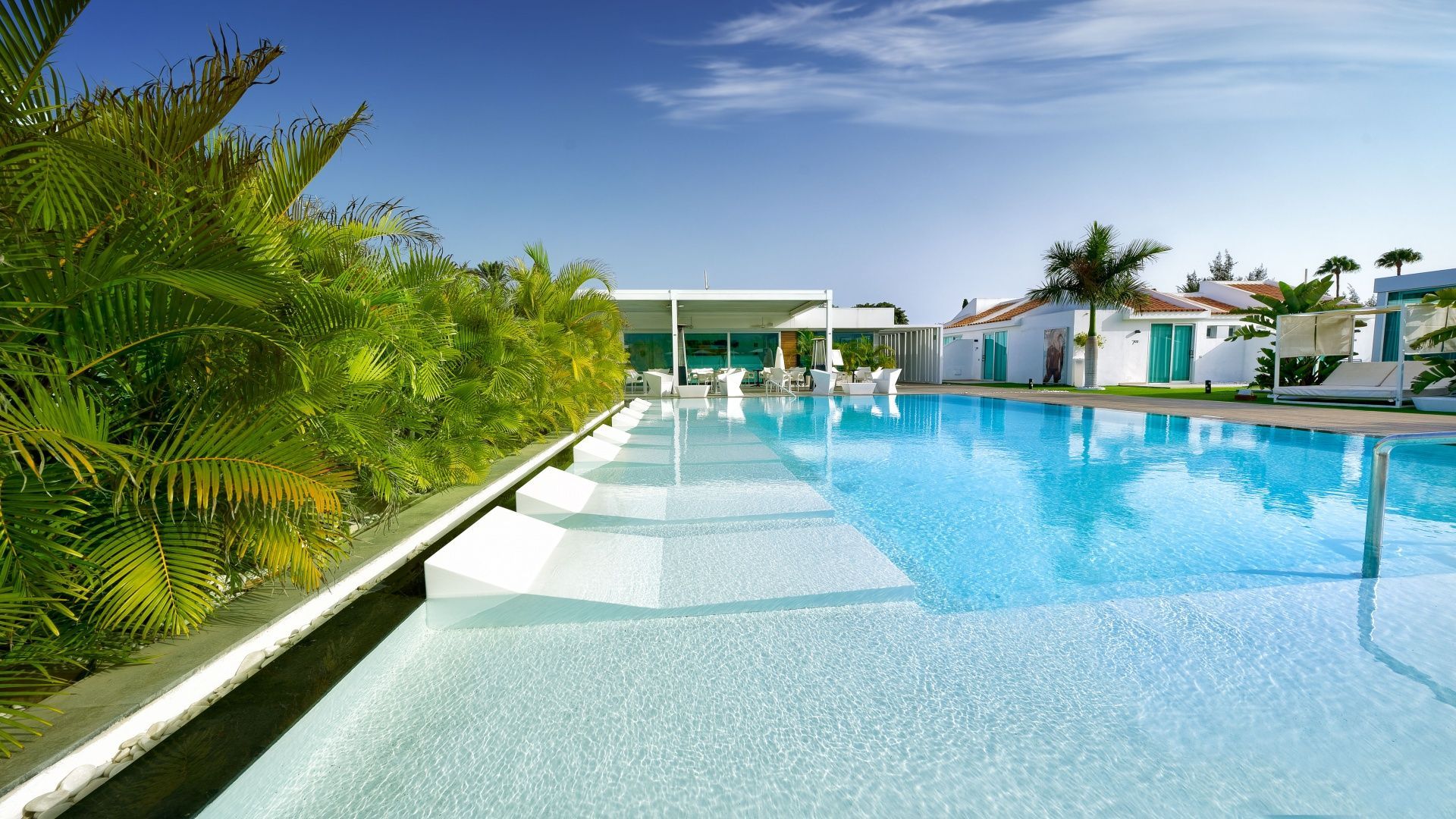
Seven Hotel & Wellness describes itself as a four-star hotel for gay men in the Maspalomas Golf area. Its official accommodation information highlights furnished terraces, wellness facilities and villas with private pools and independent access. For a gay man who wants a dedicated environment with more private space, those villa features may be worth investigating.
The important questions concern what is actually happening during your stay. Is music played around the shared pool? Are private villas exposed to neighbouring guests, garden maintenance or equipment noise? What is the arrival procedure, and can a specific room or villa position be confirmed? Even a wellness-focused property is not a promise of silence.
If the location suits you, it may allow a trip that includes selected evenings out while keeping the accommodation itself separate from the busiest nightlife streets. Confirm transfer logistics and guest eligibility directly rather than relying on third-party listings.
Vista Bonita, Maspalomas
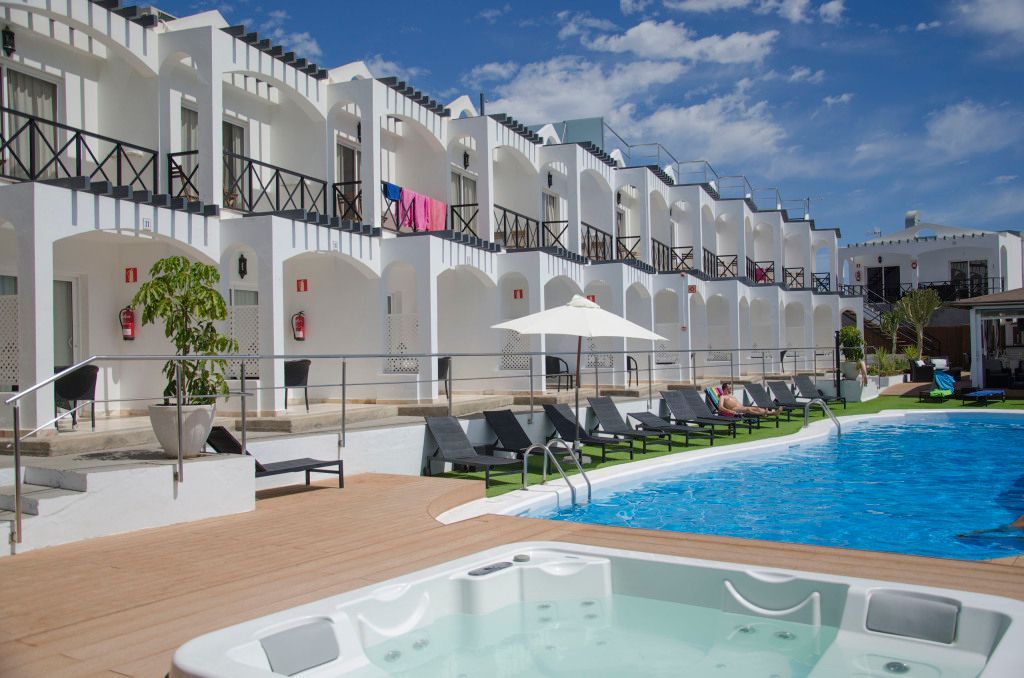
Vista Bonita describes itself as a gay and lesbian resort in a residential part of Maspalomas. Its accommodation includes duplex apartments around a pool and garden, with some kitchen-equipped options. That can appeal to travellers who prefer separate living and sleeping areas and some control over meal times.
There is a crucial room-specific caveat. The operator warns that its one-bedroom apartment category sits above a restaurant and that the balcony overlooks a street, where daytime noise can be higher than expected. Meanwhile, the resort describes its pool bar as a social meeting point where music may be played. It would be misleading to call every apartment a quiet option simply because the wider area is residential.
Ask which accommodation category is away from the restaurant and pool bar, whether music is scheduled, whether windows face shared spaces and what can be confirmed in writing. This is a strong example of why reading the official room description matters more than the property's general atmosphere.
Birdcage Resort, Playa del Inglés
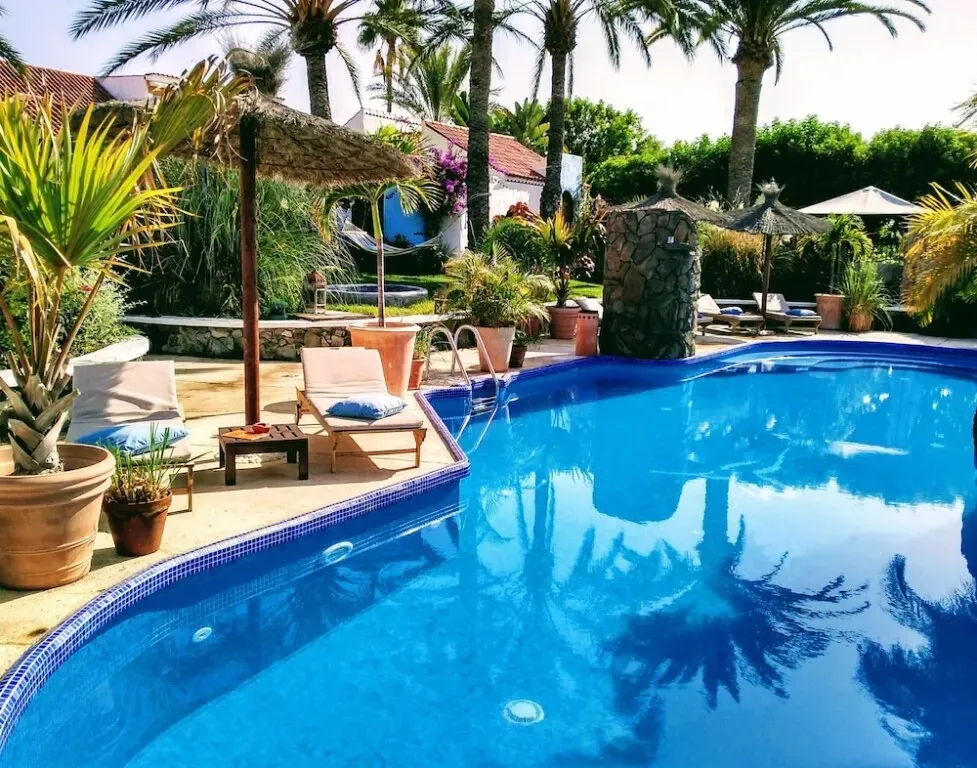
Birdcage Resort presents itself as a gay men-only boutique lifestyle property in Playa del Inglés. Its official information emphasises designer accommodation, a home-like atmosphere and suites, many with private gardens. It also promotes its proximity to the Yumbo nightlife area.
That combination may work for a traveller who wants to step into LGBT+ nightlife selectively and then return to a more private setting. But proximity to nightlife, garden layout and the precise room position still need checking. Ask whether the garden is genuinely private, how sound travels between suites, whether outside guests attend social events and whether any nearby venues can be heard after midnight.
A traveller seeking complete separation from entertainment might prefer another location. A person who values an easy route back after a short social visit might find that proximity helpful. Both assessments are reasonable.
Comparing the Three Resorts for Sensory Comfort
These three properties demonstrate why choosing dedicated LGBT+ accommodation is not simply a question of selecting the hotel that sounds the most peaceful.
Seven Hotel & Wellness offers private-pool villa accommodation that may provide greater separation from communal facilities. Vista Bonita has apartment-style accommodation, but its official room descriptions also identify possible restaurant and road noise. Birdcage Resort provides a dedicated gay men's environment with private garden accommodation options, while its proximity to the Yumbo area may be convenient for some travellers and less suitable for others.
The table below compares the potential benefits, possible sensory concerns and questions to investigate at each property.
| Dedicated LGBT+ property | Location and stated audience | Potential advantage to investigate | Possible sensory concern | What to confirm before booking |
|---|---|---|---|---|
| Seven Hotel & Wellness | Maspalomas Golf; marketed to gay men | Some villas have private pools and their own access, which may reduce time in shared spaces | Shared-pool activity; equipment or neighbouring noise; private villas may have different surroundings | Exact villa or room position; pool music; access route; current guest policy; any scheduled events |
| Vista Bonita | Residential Maspalomas; marketed as a gay and lesbian resort | Apartment layouts and kitchen facilities may allow more predictable meals and rest | Official one-bedroom category sits above a restaurant with balcony facing a road; social pool bar has music | Confirm a specific apartment category away from restaurant and pool bar; music and day-pass programme; written room-location confirmation |
| Birdcage Resort | Playa del Inglés; marketed as gay men-only | Some suites have private gardens; proximity to Yumbo may shorten the journey back after an evening out | Nearby nightlife, garden or pool noise and guest events; hotel website still carries an old 2025 maintenance notice | Current pool operation; noise after midnight; private garden layout; social events; best room for your dates |
No property should be described as guaranteed sensory-friendly on the basis of these features alone.
The best choice will depend on the room available, the dates of travel and the individual traveller's preferences. Details should be reconfirmed before booking.
When Is the Best Time to Book a Quieter LGBT+ Holiday?
There is no universal quietest month. A destination may be calmer outside school holidays, but hotel occupancy, climate, local public holidays and events can change the picture. An off-peak period can also bring reduced restaurant opening hours or fewer direct flights. Choose dates using a combination of factors rather than a single seasonal label.
Check the LGBT+ events calendar
Pride events, bear weeks, fetish celebrations and major club festivals can transform a normally manageable resort for several days. In Gran Canaria, the atmosphere around Yumbo and Playa del Inglés can be particularly different during major events. Sitges and Mykonos also have weeks when visitor numbers and the nightlife programme change substantially.
If you want to attend, that is not a reason to rule out the holiday. It is a reason to decide which events matter and plan a room and recovery schedule around them. If you want quiet above all else, consider different dates and verify the official event timetable before paying a non-refundable deposit.
Use our LGBT+ events calendar as a starting point, then check the event organiser's latest dates and any nearby venue programme. Calendar entries can change and should never be treated as guaranteed future schedules.
Why Checking the Exact Year Matters
Gran Canaria demonstrates how dramatically the atmosphere of one destination can change across the calendar.
For 2027, published event dates include Maspalomas Bear Carnival from 8 to 18 April, Maspalomas Pride from 3 to 9 May and Maspalomas Fetish Pride from 1 to 12 October.
These dates are useful planning examples, not a guarantee that every event will operate exactly as previously advertised. Individual parties, pool events and entertainment programmes may be confirmed later.
If you want a particularly calm holiday, examine the dates before and after major events too. Travellers may arrive early or stay longer, while hotels and venues may arrange additional entertainment around the official programme.
If you enjoy LGBT+ events, consider staying a little farther from the busiest venues and choosing which activities you want to attend. You can still experience the community without arranging your entire holiday around a demanding schedule.
Always check the current event organiser's announcements and confirm whether your preferred hotel has additional activities during those dates.
Look beyond school holidays
Check school holidays in both the UK and the destination country, along with bank holidays, major conferences, concerts and sporting fixtures. Weekends may bring local guests into hotel bars and beach clubs even when international visitor numbers are modest. In ports, cruise arrivals can create short bursts of daytime crowds.
Travel outside the busiest period may improve the chances of a calmer experience, but not every facility will operate as usual. If a hotel closes a quiet restaurant in low season and uses one central buffet instead, the supposed advantage can disappear. Ask what actually runs during your chosen week.
Weather is part of sensory planning. High heat, humid nights, strong winds or intense midday sun can be harder than a moderately busy week with more comfortable temperatures. Consider temperature, daylight, seasonal rain and whether you will spend most of the time indoors or outdoors.
A Practical Way to Compare Two Possible Travel Dates
Rather than searching for the quietest month, compare two or three specific travel periods.
Start with the destination's event calendar. Then check school holidays, public holidays, flight schedules, local weather and the facilities that will be operating at your chosen hotel.
A quieter resort week is not necessarily the easiest journey. You might find that the least expensive departure involves an overnight airport wait or an arrival that disrupts your normal routine.
Similarly, a hotel may have fewer guests in low season but provide fewer dining options or reduced transport services.
The comparison below shows the factors worth checking before deciding.
| Timing factor | What to check | Potential sensory effect | Practical decision |
|---|---|---|---|
| Major LGBT+ festival week | Organiser dates plus hotel and venue programme | Evening noise, busier taxis, guests and outdoor entertainment | Choose another week or book a room away from events and plan limited attendance |
| School holidays and public holidays | UK and destination-country school and public holidays | Crowded terminals, shared spaces and attraction queues | Compare nearby departure dates and actual hotel facilities |
| Flight departure and arrival times | Door-to-door itinerary, airport access, check-in and onward transfer | Sleep disruption, unclear late arrival, longer waiting | Prioritise a manageable full journey over a supposedly quiet departure hour |
| Seasonal weather and daylight | Heat, humidity, winds, rain and sunset time for destination | Heat, glare, uncomfortable nights or changes to outdoor plans | Select a climate you tolerate and book a room with controllable temperature and light |
| Weekend and local events | Concerts, conferences, sporting fixtures and cruise-ship arrivals | Temporary pool, neighbourhood or day-trip crowding | Check exact hotel location and the programme for your dates |
| Low-season service changes | Hotel restaurants, entertainment, pool and transfer schedules | Closed quiet facilities, limited meals or extra uncertainty | Confirm which facilities will operate rather than assuming off-peak means calmer |
If the dates are flexible, ask your travel adviser to compare the complete holiday arrangements for each option, rather than choosing solely on the flight price or average resort occupancy.
Choosing Flights and Transfers That Feel More Manageable
A flight advertised as early or late is not necessarily the least stressful. An early departure may mean a 3am alarm, unfamiliar airport transport and little sleep. A later flight may bring a crowded terminal or a midnight arrival. Judge the full journey from home to hotel, including the return trip.
Direct flights reduce changes and repeated security procedures, but they are not always the best option if the only direct service arrives very late. A connection may be acceptable when the traveller wants a break between stages and the transfer is simple. Compare total hours, gate changes, waiting times and how much flexibility is built into the schedule.
For travellers who need airport assistance, the UK Civil Aviation Authority's assisted-travel guidance recommends requesting it when booking or at least 48 hours before departure where possible. Explain what would help: written instructions, assistance through the terminal, a quieter waiting area where one exists, or support navigating security. Keep confirmation of what has actually been arranged.
Sunflower lanyards and similar identifiers can help indicate a non-visible disability, but they are optional and do not automatically reserve assistance or access to a particular quiet room. Check what your departure and arrival airports offer. Airport layouts, quieter spaces, screening procedures and assistance arrangements vary.
Think About the Experience on Board
The aircraft itself can present a different set of sensory challenges from the airport.
Seat location may affect how much you experience engine noise, movement through the aisle, light from the galley and interruptions from other passengers. Your preferred seat will depend on what you find most comfortable, so ask about the available seating arrangements before choosing one.
Some people prefer early boarding because it gives them more time to settle. Others would rather minimise how long they remain seated on the aircraft before departure. Where an airline offers a choice, consider which option works better for you.
Think about announcements, cabin lighting, food smells and periods when passengers are moving around.
Headphones, familiar entertainment, a comfortable layer of clothing or a preferred snack may help, subject to airline and security rules.
If you are travelling with another person, agree in advance how you will communicate when you need assistance or would prefer not to talk.
Where possible, avoid arranging demanding activities immediately after landing. A manageable flight followed by a difficult transfer and a crowded hotel reception can still make the overall journey exhausting.
Think carefully about the transfer. A pre-arranged direct car with clear meeting instructions may reduce uncertainty compared with a shared coach with several hotel stops, but check whether the vehicle, route and cost suit your needs. Ask whether the driver can communicate by text, where they will wait and what happens after a delayed flight.
Finally, plan the first evening. A calm arrival may matter more than squeezing in an extra activity. Check reception hours, whether food will be available, how to reach your room and whether you can have a low-demand first morning.
Choosing LGBT+ Destinations Without Assuming They Are Quiet
A destination's reputation for LGBT+ life tells you very little about a particular room or neighbourhood. Popular gay resorts can offer both lively and restful experiences. The useful question is where to base yourself in relation to the activities you actually want.
Gran Canaria: choose the right side of the scene
In Playa del Inglés, being near Yumbo can make evening activities easy, but the neighbouring streets may become much busier during special events. Maspalomas residential and golf areas can give a different feel, although no area or accommodation is guaranteed quiet. If you enjoy the dunes and beach, think about transfer distances and how hot or exposed the walk might be.
Our Gran Canaria gay holidays guide explains the destination's broader LGBT+ appeal. This sensory guide should help you narrow down the exact property, room and week.
Sitges, Malta and Copenhagen: compare areas, not labels
Sitges, Spain
Sitges has a concentrated nightlife scene around streets including Carrer Primer de Maig, Plaça de la Indústria and Joan Tarrida. These locations may be convenient for enjoying the LGBT+ scene, but they are worth checking carefully if evening noise is a concern. When comparing accommodation, look at the exact street, the position of the bedroom and whether nearby terraces operate late into the night. Staying away from the busiest entertainment streets can be sensible, provided the journey to the beach and places you want to visit remains manageable.
Malta
In Malta, Paceville in St Julian's is a major nightlife area, so accommodation in or immediately around its entertainment streets deserves particular attention. Do not assume that every hotel elsewhere in Malta will be quiet, particularly near busy waterfront roads, restaurants or seasonal events. Decide whether you would prefer easier access to evening venues or somewhere more separate from the nightlife. Compare airport transfers, local transport and how easily you can return to your hotel if you want to leave an activity early.
Copenhagen, Denmark
Copenhagen offers cultural attractions and LGBT+ nightlife without requiring visitors to stay directly beside the busiest venues. The Meatpacking District, known locally as Kødbyen, is an established nightlife area within Vesterbro. If you prefer a calmer hotel, compare accommodation on individual residential side streets with properties immediately surrounding popular bars and clubs. Check public transport, walking distances and whether your proposed room faces the street or an internal courtyard. Even residential streets can be noisy during events, so the exact building remains important.
For a city-based holiday, explore our gay city breaks. For a slower coastal alternative, see LGBT+ beach holidays. In either case, choose a specific address and travel pattern rather than assuming a whole destination will feel the same.
A welcoming destination is also not a universal safety guarantee. Laws, local attitudes and personal experiences differ, especially for trans and non-binary travellers. Review the FCDO's LGBT+ travel guidance and the current country advice before deciding. Respectful hotel staff and a suitable neighbourhood remain important alongside national legal protections.
Reducing Uncertainty for Trans and Non-Binary Travellers
For trans and non-binary travellers, a calm holiday may also depend on reducing uncertainty around check-in, personal information and how staff address guests.
Where relevant, confirm which details the hotel requires for its booking records and how preferred names and pronouns can be used in everyday communication. Airline tickets and travel documents must comply with the relevant identity requirements, so check those arrangements before travelling.
Privacy can be particularly important. Ask how a property handles personal information and whether any concerns can be raised discreetly with a named member of staff.
Research local laws and social attitudes as well as the accommodation's own policies. A welcoming hotel does not automatically mean every location or venue in the surrounding destination will offer the same experience.
The aim is to reduce avoidable surprises, allowing you to concentrate on enjoying the holiday rather than repeatedly explaining arrangements that could have been discussed in advance.
Enjoying LGBT+ Events Without Sensory Overload
You should not have to give up Pride, community events or nightlife simply because you want a more manageable environment. Try choosing one meaningful activity rather than filling an entire day. Check whether tickets have timed entry, whether quieter seating exists and whether outdoor or smaller venues might work better for you.
Research the route home before leaving. Identify a place to step outside, agree on an exit plan with a companion and keep enough time to return before you are exhausted. A short visit can be a success. There is no obligation to stay until the last act or visit every bar in an evening.
Some travellers like a busy event when they know exactly when it starts and ends. Others prefer spontaneity but need an easy way out. Your own preferences should shape the plan. An LGBT+ holiday can offer community connection and privacy in the same trip.
Example: A Four-Night LGBT+ Break with Time to Recharge
A four-night holiday in Gran Canaria could combine community experiences with quieter days, without following a rigid timetable.
Arrival day: Take a pre-arranged transfer to the hotel, settle into your room and keep the evening free. Have dinner somewhere familiar or convenient rather than arranging activities immediately.
First full day: Enjoy a relaxed breakfast and choose one daytime activity, such as visiting the beach or exploring Maspalomas. Leave the afternoon available for rest.
Second full day: Plan a short visit to an LGBT+ event or social venue you particularly want to experience. Check the route and return transport beforehand. Leave when you feel ready rather than trying to stay for the entire programme.
Final full day: Keep the day flexible. You might return to a favourite restaurant, enjoy the pool or spend time somewhere quieter before travelling home.
This is an illustrative itinerary, not a fixed recommendation. Some travellers prefer more activity, while others may want additional rest days.
The principle is to build the holiday around the experiences you genuinely want and leave enough flexibility to enjoy them comfortably.
Prepare Before You Travel, Then Leave Space to Rest
The National Autistic Society's holiday guidance recommends preparing for changes, previewing environments and allowing time for breaks. Those principles are useful for many travellers, whether or not they identify as autistic.
Before departure, save the hotel address, photographs of the entrance, room layout if available, airport meeting point, transfer instructions and restaurant information. A written day-by-day outline can be helpful, but do not fill every hour. Make sure essential bookings and reservation details are available offline in case mobile data fails.
Pack the things that help you personally: noise-cancelling headphones, ear defenders, sunglasses, an eye mask, comfortable clothing, familiar toiletries or a preferred snack. Check airline cabin baggage rules for anything unusual. Do not assume a hotel will supply sensory equipment unless it has explicitly confirmed that service.
Create a simple plan for days when your surroundings become too much. That might mean returning to the room, ordering a familiar meal, switching to a quieter activity or using a pre-agreed signal with your travelling companion. Protecting time to recover is part of the holiday, not a failure to enjoy it.
An independent traveller may value clear written instructions and a reliable hotel contact. A couple may need to discuss differences in energy levels. Friends travelling together should avoid assuming everyone wants to follow the same schedule. The most comfortable itinerary often includes genuine choice.
Travelling Solo or at Your Own Pace
Solo LGBT+ travellers may want a hotel with approachable staff, clear written information and comfortable opportunities to meet others without feeling pressured to join activities.
For some older travellers, convenient transport, manageable walking distances and predictable meal arrangements may be particularly valuable. Age alone does not determine anyone's sensory needs or preferred pace.
Think about how much support you would like and when you would prefer privacy. A small dedicated LGBT+ hotel may offer a familiar social atmosphere, while a larger property may provide more facilities and the option to remain independent.
If joining a group or attending your first LGBT+ event, consider a quieter daytime gathering as an introduction before deciding whether a busier evening event appeals to you.
There is no correct amount of socialising required to enjoy an LGBT+ holiday.
Questions to Ask Before You Pay a Deposit
Good hotel questions are specific enough to receive useful answers. Send them by email and distinguish an answer about general facilities from a firm arrangement recorded against your booking.
- Which room category and part of the building is least exposed to road, bar, pool and lift noise?
- Can you confirm the exact position, or is a quiet room only a non-guaranteed preference?
- Are there pool parties, DJs, entertainment evenings, outside guests or day passes during my stay?
- Can bedroom and bathroom lighting be controlled separately, and are blackout curtains provided?
- Does air conditioning run quietly and can its settings be adjusted?
- Can I request a table in a quieter dining area, or choose another breakfast arrangement?
- Is it possible to receive check-in, accessibility and transfer details in writing?
- What guest eligibility or accommodation policies apply, and how are LGBT+ couples or guests addressed?
- What are the latest local event dates and how might they affect the hotel or surrounding streets?
- What happens if an agreed arrangement cannot be provided when I arrive?
If a feature is essential, ask what the supplier can commit to and whether that confirmation becomes part of the booking documentation. A request passed to reception is not the same thing as a confirmed facility. If an answer is vague, investigate before making payment rather than hoping it will work out.
For travellers who also need step-free rooms, mobility equipment or adapted transfers, our separate wheelchair-accessible LGBT+ holidays guide covers those detailed checks.
Booking Confidence and Financial Protection
Before confirming any holiday, ask who your contract is with and what protection applies to the precise arrangements. Wide Awake Holidays is a gay-owned travel brand within Wake Enterprises Limited and is a member of Protected Trust Services. Its booking arrangements can vary depending on whether you choose a supplier's package or a tailored combination of travel services.
Eligible flight-inclusive packages may have ATOL protection. When ATOL applies, the ATOL Certificate identifies the protected components. Eligible tailor-made arrangements may also include Supplier Failure Insurance or Scheduled Airline Failure Insurance, depending on the booking structure and protection in place. These are not automatic guarantees for every individual flight, hotel night or travel service.
Financial protection and travel insurance serve different purposes. Protection against the failure of a travel organiser or supplier does not automatically cover cancellation for personal reasons, medical treatment abroad, lost belongings or problems caused by an unsuitable hotel environment.
Check that your travel insurance reflects your individual circumstances, planned activities and any medical conditions that need to be declared. If there are specific arrangements you depend upon, ask how those requirements are documented and what options exist if they cannot be provided.
Understanding these differences before booking helps avoid assumptions about what will happen if your plans need to change.
Wide Awake Holidays is a trading division of Wake Enterprises Limited. Jamie Wake Travel is a separate brand, and its involvement with Wide Awake Holidays is limited to providing online booking functionality. Jamie Wake Travel does not administer or manage Wide Awake Holidays.
Before confirming a holiday, we explain the contractual booking arrangements and the financial protection applying to the services being purchased.
For customers booking from outside the UK, the position may differ depending on their country of residence and the individual booking arrangements. We will clarify the protection applicable to their booking rather than suggest that every customer receives identical UK protection.
Jamie Says:
"I go to Maspalomas Fetish Pride every year, and one thing I've learnt is that the same resort can feel completely different during an event week. Some people want to be right in the middle of everything, while others would rather have somewhere peaceful to return to.
For me, choosing the right room and location is just as important as choosing the hotel. I'd rather ask a few extra questions before someone books than discover afterwards that their balcony overlooks a busy bar."

Plan a Holiday That Gives You Room to Breathe
Wide Awake Holidays is here for people who want more than a generic gay-friendly label. We can help you compare dedicated LGBT+ properties with welcoming mainstream hotels, look at the surrounding streets and event calendar, and ask suppliers the detailed questions that matter to you. A holiday can be tailor-made around your preferred pace, whether that involves beach time, a city break, a selected event or a mix.
We have access to a wide range of suppliers and tour operators, but we will be clear about what is verified, what is requested and what cannot be promised. You do not need to explain your personal circumstances beyond what is helpful for planning. Start with the things that would make your time away more comfortable.
Call 01495 400947 or use our Wide Awake Holidays contact form to tell us your preferred dates, destinations and any room or travel arrangements you would like us to investigate.
Frequently Asked Questions
What makes an LGBT+ holiday sensory-friendly?
It is a holiday planned around a traveller's specific sensitivities and preferences while also providing an LGBT+-welcoming setting. Room noise, lighting, crowds, journey timing and recovery time matter. A hotel that is inclusive on identity does not automatically offer an environment that works for every sensory need.
How can I find a quiet LGBT+-friendly hotel?
Shortlist properties with a suitable guest policy, then check maps, room categories, neighbouring venues, pool entertainment and local events. Ask detailed questions by email and seek written confirmation of any essential requirements. Descriptions such as boutique or adults-only are not sufficient evidence by themselves.
Are adults-only hotels always quieter?
No. Some adults-only hotels focus on DJs, nightlife, pool parties and late bars. Others have a calm wellness atmosphere. Investigate the actual programme, room position and use of outside guest passes for your exact dates.
Which is better for sensory sensitivities, a hotel, apartment or villa?
It depends on what you need to control. An apartment can make dining routines easier, a villa can reduce shared-space demands and a staffed hotel may provide more help. Each can still have street noise, neighbours or unpredictable facilities. Compare the exact property rather than the category alone.
When is the quietest time to visit an LGBT+ destination?
Often outside major event weeks, busy school holidays and local public holidays, but there is no reliable universal quiet period. Check official event programmes, accommodation occupancy patterns where available, flight schedules and weather before choosing dates.
Can I guarantee a quiet hotel room before booking?
Only if the supplier is willing and able to make a specific, binding confirmation. Many hotels treat room location as a request subject to allocation. Ask what can be recorded on the reservation and which alternatives exist if the preferred room is unavailable.
Is airport help available for autistic and other neurodivergent travellers?
UK airport assistance can support travellers with non-visible disabilities. Describe the practical help you need and arrange it when booking or, where possible, at least 48 hours before flying. A quiet room or particular assistance route is not available at every airport, so verify facilities beforehand.
Can I attend Pride events if I find crowds overwhelming?
Yes, if the individual event and its arrangements suit you. Consider shorter visits, planned entrances and exits, quieter viewing areas where available, breaks and a nearby accommodation base. You can enjoy the parts that matter to you without committing to every event.
Do I need an autism diagnosis to ask about sensory adjustments?
You can explain your preferences and ask a hotel for quieter accommodation, written instructions or other suitable arrangements without describing a diagnosis. Some statutory assistance rights depend on disability and jurisdiction, but providers can still discuss individual requests. Confirm what they will actually supply.
About Jamie Wake
Jamie Wake is the founder of Wide Awake Holidays and Jamie Wake Travel, helping UK travellers plan inclusive holidays where they can feel genuinely welcome, comfortable and confident.
Jamie combines personal experience with professional travel-industry knowledge to help travellers compare destinations, hotels, resorts and holiday experiences more carefully. His approach looks beyond labels such as “gay-friendly” to consider how inclusive and welcoming a destination or property is likely to feel in practice.
Through Wide Awake Holidays, Jamie shares practical, honest guidance about LGBTQ+ travel, inclusive destinations and choosing holidays that suit each traveller - not simply the option with a rainbow in its marketing.
Some of our Latest Offers
Discover our latest hand-picked travel offers below – automatically updated and inspired by the destinations featured in this blog.