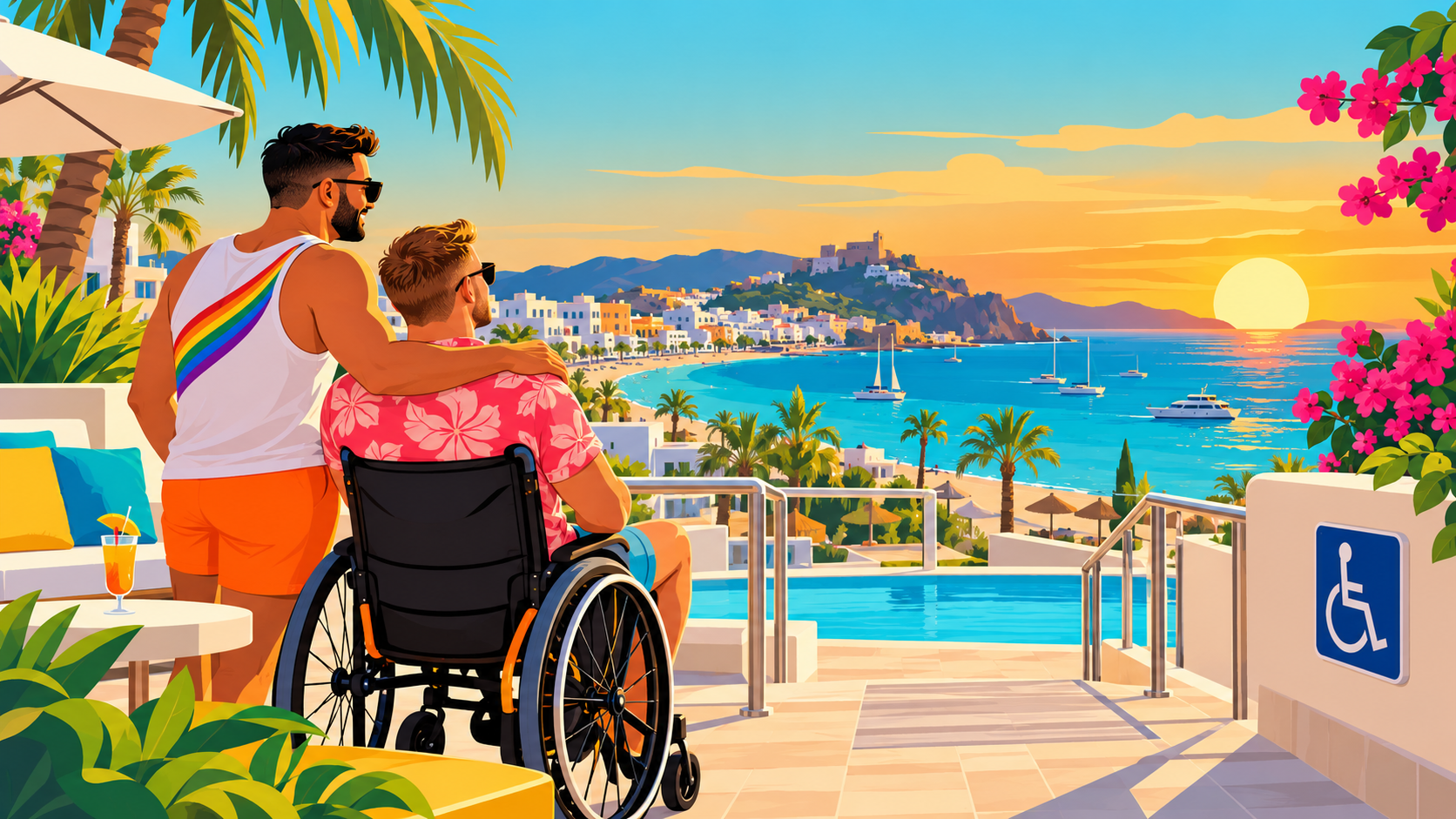

Neurodivergent LGBT+ Holidays: Planning a More Predictable Trip
Neurodivergent LGBT+ Holidays: Planning a More Predictable Trip

Neurodivergent LGBT+ holidays are easier to plan when you know what will happen, what might change and whom to contact if it does. You should not have to choose between a genuinely welcoming LGBT+ experience and a trip that works for the way you think, communicate or process the world.
This guide shows you how to build a flexible plan for flights, transfers, accommodation, activities and unexpected changes. Whether you are autistic, have ADHD, have both autism and ADHD (sometimes called AuDHD), identify as neurodivergent in another way, or simply find certain travel situations difficult, you can choose the level of structure that suits you. The aim is not a perfectly controlled holiday. It is a trip with fewer avoidable surprises and more room to enjoy yourself.
What makes a neurodivergent LGBT+ holiday more predictable?
Predictability starts with useful information: a clear journey, understandable instructions, confirmed essentials and a plan for changes. It does not necessarily mean waking up to a rigid timetable. Some people want an almost empty day. Others love busy LGBT+ events, new experiences and plenty of stimulation, but find transitions and uncertainty harder than the activity itself.
Autism, ADHD and AuDHD are not interchangeable. Nor do two autistic or ADHD travellers necessarily need the same support. An autistic person may value previewing an unfamiliar place. Someone with ADHD may find a single checklist and timed reminders helpful. An AuDHD traveller may want novelty while also relying on familiar routines. Those are possibilities, not rules.
LGBT+ inclusion is another part of the decision. A hotel can offer orderly check-in but leave a couple feeling unwelcome. A proudly gay venue may provide a wonderful community atmosphere but have late-night music. Neither should be labelled automatically suitable or unsuitable.
Choosing the right style of holiday comes first. Our gay and LGBT+ holidays options range from beach breaks to city escapes and tailored itineraries. The important part is choosing the experience you actually want, then working out how to make the arrangements manageable.
This article focuses on managing the journey and decisions. For detailed guidance on room locations, background noise and timing around events, see our sensory-friendly LGBT+ holidays guide.
Build a personal travel profile before comparing holidays
Start with an ordinary day rather than a destination wish list. Think about when you feel comfortable, what you enjoy and which situations cost you more energy than expected. This is not a medical assessment. It is a practical brief you control.
Write down five things: your essential needs, your preferences, what you would like confirmed in advance, how you want to receive information and the alternatives that would be acceptable if a plan changes. Someone might put "written transfer meeting point" in the essential column but "a balcony" in the preference column. Another person may consider a separate bedroom or a known breakfast option essential.
A simple planning profile could look like this:
| Travel stage | What helps me | Confirmation to request | Backup option |
|---|---|---|---|
| Departure airport | Clear map, short instructions and enough transition time | Terminal, check-in deadline, eligibility for assistance and where to report | Assistance desk contact and an earlier arrival plan |
| Flight | Seat expectations and essential items within reach | Seats, boarding process, baggage and any approved adjustments | Written cabin-crew request and suitable personal comfort items |
| Arrival transfer | Exact named meeting point and contact number | Driver/representative, flight-delay procedure and vehicle type | Official provider helpline and authorised alternative pickup |
| Hotel | Predictable arrival steps, room requirements and privacy | Check-in time, booked category, essential requests and reception contact | Duty manager/organiser contact and agreed alternative |
| Meals | Flexible meal timing and known options | Breakfast hours, self-catering facilities or suitable menu options | Nearby familiar food choice and supermarket route |
| Activities | One essential plan and a small set of optional choices | Start point, duration, group size and cancellation rules | Shorter nearby activity or an unstructured afternoon |
| Return journey | Clear checkout and onward travel process | Transfer pickup, flight details and airport terminal | Provider contact and a departure reminder |
You decide what to share. Practical preferences can often be explained without giving a diagnosis, personal history or details about your identity. Ask the supplier what information is necessary to arrange specific assistance, particularly where formal eligibility rules apply.
When a particular arrangement is essential, ask whether the supplier can confirm it as part of your booking. There is an important difference between "we have noted your request" and "this arrangement has been confirmed". A requested room location, meal arrangement or transport preference may remain subject to availability. If a supplier cannot confirm something you genuinely need, discuss an alternative before paying rather than assuming it will be available on arrival.
You can also use your personal travel profile when speaking to Wide Awake Holidays. Rather than simply asking for a neurodivergent-friendly hotel, tell us which practical arrangements would make the biggest difference. We can investigate suitable suppliers, request clarification and help distinguish confirmed arrangements from preferences before you decide whether to book.
Plan fixed points, flexible choices and recovery time
The most useful itinerary is often a three-part plan. First, list what is fixed: flights, check-in, prepaid tours and departure times. Second, keep an optional list of places, restaurants or experiences. Third, leave space for breaks, familiar activities and the unexpected.
Imagine a four-night LGBT+ city break in Barcelona where you want to explore the city but avoid making every decision on the day.
Day one - Arrival: Keep the afternoon focused on reaching your accommodation, checking in and finding somewhere convenient for dinner. Avoid booking an evening activity that depends on your flight arriving exactly on time.
Day two - A fixed activity: Reserve one museum visit for late morning, leaving enough time for breakfast and the journey there. Choose two possible lunch stops nearby. The afternoon remains optional, depending on how you feel.
Day three - LGBT+ Barcelona: Plan a self-guided walk through the Eixample neighbourhood, with a choice of cafés and an easy route back to the hotel. If you want to explore the nightlife, check opening times and your return journey in advance.
Day four - Flexible discovery: Decide the previous evening whether to visit the waterfront, explore another neighbourhood or spend more time at the accommodation. Nothing essential depends on this choice.
Day five - Departure: Keep the morning simple. Confirm checkout, the transfer meeting point and airport arrangements the night before. Allow enough time for the journey without relying on last-minute decisions.
The benefit is not the particular activities. It is knowing which parts of the holiday are fixed, where you can make choices and what happens if you decide to do less.
This is a planning example, not a suggested schedule for everybody. Some travellers prefer several prebooked activities because making decisions on the day is tiring. Others need as few fixed commitments as possible. Agree which activities matter most and build around them.
Try a ten-minute evening check-in: what is confirmed for tomorrow, what needs booking, what can be dropped and where is the nearest easy return route? Keep all updates in one document rather than across several message threads. If your plans are shared, name who will make each booking and who will monitor changes. If nobody has a task assigned, it is easy to assume somebody else has dealt with it.
Flights, airports and transfers: make every stage clear
Before leaving home
Save flight numbers, terminal details, airline baggage rules, boarding arrangements and the address of your first accommodation. Take screenshots as well as keeping online links, because mobile data and airport Wi-Fi may be unreliable. Look for airport maps, photographs or familiarisation guides. If early mornings or time management are difficult, schedule reminders for leaving home, check-in closure and boarding rather than just the flight departure.
Under UK rules, eligible passengers with disabilities, including non-visible disabilities, can request airport and airline assistance. The Civil Aviation Authority's assisted-travel guidance recommends requesting support when booking or at least 48 hours before travel where possible. Explain the practical help required and keep the response in writing. Requests made later may be harder to arrange.
At the airport and on the aircraft
Make a short sequence for the day: arrival point, check-in, security, departure gate, boarding, flight, passport control, baggage and exit. Include where assistance is collected if arranged. Ask about quieter waiting options, extra time or seating needs, but do not assume that an airport can provide every request.
A Hidden Disabilities Sunflower lanyard can signal that someone may need understanding or extra support. It is not a fast-track ticket, a guarantee of a quiet room or a substitute for booking formal assistance.
If you use headphones, earplugs or a comfort item, check that their use is compatible with airline safety instructions. Put essential items and any prescribed medication in appropriate hand luggage, observing airline and security restrictions.
Arrival and the final transfer
The arrival transfer is often the least described part of a package. Confirm whether somebody will meet you inside the terminal or outside, what identification they will display, whether the service is shared or private, and what happens if the flight is late. Save the meeting-point instructions offline. Ask who to contact if you cannot find the representative, and agree an authorised alternative rather than getting into an unverified vehicle.
For travellers who find another decision after a flight particularly difficult, a prearranged private transfer may be worth comparing with a shared coach. It can cost more and still be affected by traffic, but the handover can be simpler when the arrangements are confirmed.
For a wider list of questions to put to airlines, transfers and hotels, our accessible LGBT+ holiday booking guide covers supplier checks in more detail.
Travel planning with autism, ADHD or AuDHD
A helpful strategy solves a specific problem rather than following a universal "neurodivergent packing list".
Executive function describes the skills we use to organise tasks, remember information, manage time and make decisions. Travel can place extra demands on these skills, particularly when several bookings, unfamiliar environments and changes of plan need managing at once. The most helpful strategy is often one that removes a decision or makes the next step easier to follow.
If time blindness makes departures stressful, use alarms labelled with the action, such as "leave hotel now", not simply "airport". If deciding what to pack becomes overwhelming, split the job into documents, medication, everyday clothing and optional items, then check each category on separate days. Put passports, booking references, insurance and important contacts into one clearly named folder.
For transitions, preview the next environment. A photo of the hotel entrance, a map of the station or a short description of airport security can make an unfamiliar step less mysterious. Familiar routines such as breakfast, a morning walk or a regular downtime period can provide stability without preventing discovery.
Some travellers need stimulation rather than additional quiet. Build in a choice: an exhibition, a lively daytime event or a swim may be energising, while a compulsory slow afternoon might be frustrating. The trick is to keep an easy alternative available and recognise that yesterday's preference may differ from today's.
You can prepare a short travel card with your accommodation address, an emergency contact and a clear request such as "Please write the instructions down". If you sometimes find speaking difficult when overwhelmed, agree a simple message or signal with your companion in advance. The objective is choice and independence, not making somebody else responsible for every decision.
LGBT+ inclusion, identity and privacy belong in the plan
A property describing itself as "gay-friendly" does not tell you how a same-sex couple will be welcomed at reception or whether staff understand different gender identities. Ask practical questions: will the requested bed configuration be recorded, are guest names used respectfully in routine communication, and can relevant instructions be supplied by email?
For trans and non-binary travellers, it may be particularly useful to clarify which legal names must match passports, airline tickets and other official documents, and which names can be used in informal communications. Border procedures depend on the countries concerned. Avoid assuming hotel policies override legal travel-document requirements.
Review the FCDO's LGBT+ foreign travel advice and the current country advice before choosing a destination. Laws, local attitudes and the experience inside individual hotels can differ. Consider how you prefer to handle public affection, privacy, nightlife and meeting new people. Solo travellers may also want to know whether a property is a social hub or somewhere they can remain independent.
When requesting support, share the minimum information needed to achieve the purpose. For example: "Please send transfer instructions by email, including a photograph or precise description of the meeting point. I find unexpected changes difficult and would appreciate written confirmation of any alteration." That is usually more actionable than a general request for a "neurodivergent-friendly service".
Our guide to questions to ask trans-friendly hotels goes deeper into names, check-in processes and privacy. This article's job is to bring those concerns into your overall travel plan.
Three LGBT+-focused places that illustrate different planning choices
These are examples of dedicated LGBT+ accommodation, not clinically verified neurodivergent-friendly hotels. Their official descriptions establish their intended audiences and facilities, but do not confirm that a particular room, week or service will suit you. They are deliberately different from the three resorts compared in our sensory-friendly guide.
Hotel Ritual Maspalomas, Gran Canaria
Hotel Ritual Maspalomas describes itself as accommodation focused on LGBT+ guests, close to the Yumbo Centre in Playa del Inglés. Its own site advertises pool parties, a nude zone, reception around the clock and a mix of junior suites and apartment accommodation, including some with kitchens. That may suit somebody who wants an unmistakably LGBT+ setting and a short journey to social venues.
The planning question is whether the convenience outweighs the activity around the property. Ask for the current pool-event calendar, check-in instructions, room category and an accurate account of music and nearby nightlife during your dates. A kitchen-equipped apartment might make meals more flexible, but it is not evidence of a quiet room. Our gay holidays to Gran Canaria guide explains the wider resort area.
There is also a useful difference between booking a junior suite and a self-catering apartment. The property's published room descriptions include apartments with kitchen facilities, which could help a traveller who wants greater control over meal times or familiar food. Check the exact category being offered rather than assuming every room has a kitchen. Bed arrangements should also be confirmed, particularly if sharing one bed is an important part of the booking. Ask the hotel to identify any room or apartment that may be affected by scheduled pool entertainment.
Axel Hotel Barcelona, Spain
Axel Hotel Barcelona is an adults-only hotel developed specifically for the LGBT+ market while welcoming other guests. Its official hotel information places it in the Eixample area and describes a rooftop pool, bar and scheduled DJ or drag entertainment. It suits the example of a city break where a traveller wants a visible LGBT+ community and the freedom to visit cultural attractions independently.
Here, predictability means planning the relationship between your room, hotel events and daily city route. Confirm whether your dates coincide with shows, where the room is located, and the easiest route back from any planned activity. The hotel's LGBT+ focus is clear. A peaceful room or particular adjustment must still be verified individually.
The hotel's official information advertises late-night DJ and drag entertainment, making the actual event programme an important booking consideration. A traveller who enjoys LGBT+ nightlife may see this as a benefit, while somebody who prefers to decide when to socialise may want a room away from entertainment areas. Ask for the current event schedule, room-location information and details of any potential disturbance before confirming the reservation. Do not assume an adults-only hotel is necessarily a quiet hotel.
The Hacienda at Warm Sands, Palm Springs, USA
The Hacienda at Warm Sands markets itself as a luxury gay men's resort with suites, landscaped grounds, pools and a clothing-optional setting. Its emphasis on suites and resort space offers a different planning proposition from a central event-oriented hotel. A traveller who values having a private base may want to investigate how the suite and grounds are arranged.
It is not a hotel for every LGBT+ traveller, and its guest policy should be confirmed. Ask how check-in works, whether a particular suite can be requested, which communal activities are offered and what transport is needed for meals or excursions. A smaller-feeling resort setting can be appealing without guaranteeing silence or the absence of unexpected changes.
The Hacienda's published arrangements make advance planning especially worthwhile. Its stated check-in time is 4pm, while its office normally closes at 7pm. Travellers expecting to arrive later need to arrange their arrival with the property in advance. This is exactly the sort of detail that can be overlooked when booking accommodation separately from flights and transfers. Confirm the arrangements again for your actual stay.
For UK travellers, Palm Springs also introduces a longer and potentially more complicated journey than a short European break. Check your flight routing, connections, immigration arrangements and onward transport before choosing this option.
British citizens travelling to the USA must meet the relevant entry requirements, including obtaining an ESTA or visa where required. The current FCDO advice for entering the USA also advises travellers whose passport sex marker differs from their sex recorded at birth to contact the US Embassy or a consulate for guidance. Check the latest requirements well before making non-refundable arrangements.
For more on the destination itself, see our guide to gay resorts in Palm Springs.
Compare these examples by their stated audience, location, activities, room types and your own comfort with the journey. Neither an LGBT+ label nor a luxury rating should replace written supplier checks.
| Property | Destination | Stated LGBT+ positioning | Planning advantages worth investigating | Potential issue to check | Booking questions |
|---|---|---|---|---|---|
| Hotel Ritual Maspalomas | Playa del Inglés, Gran Canaria | Hotel officially marketed towards LGBT+ guests | Near Yumbo; suites and some kitchenette apartments; reception 24/7 | Advertised pool parties, nightlife nearby; no guaranteed quiet rooms | Pool-event schedule; exact room category; transfer meeting; music times |
| Axel Hotel Barcelona | Eixample, Barcelona, Spain | Adults-only hotel developed for the LGBT+ community; welcomes other guests | Central location; city activities; rooftop and on-site facilities | Official site advertises evening DJs/drag; no guaranteed quiet room | Show schedule; room location; check-in process; walk/transit route |
| The Hacienda at Warm Sands | Palm Springs, California, USA | Luxury resort marketed to gay men | Suite-based accommodation, landscaped grounds and pools | Specific guest policy, suite position, travel distances and communal activity | Exact suite; transport to meals; guest eligibility; arrival instructions |
Ask Wide Awake Holidays about current packages and tailor-made options for any of these properties, including flights, transfers and practical arrangements that need checking before you book.
When the plan changes: a simple decision tree
Even carefully prepared holidays involve uncertainty. Rather than predicting every possible problem, decide who can help and what you will do first. Make the first action small enough to manage under pressure.
When something changes, use this simple decision process:
Step 1 - Is there an immediate safety concern?
If yes, move to a safe location and contact emergency services or the appropriate local authority. If not, continue to the next question.
Step 2 - Has an essential arrangement changed?
If a flight, transfer, confirmed room requirement or booked activity has changed, contact the responsible provider or organiser using the details already saved in your travel documents. Ask for the new arrangements in writing.
Step 3 - Is the proposed alternative suitable?
If yes, confirm the details, including any additional cost, and update your itinerary. If not, explain which essential requirement is not met and ask what other options are available.
Step 4 - What do I need to do next?
Focus on the next practical action rather than reorganising the entire holiday at once. Keep evidence of changes and any additional expenses, particularly where a refund or other remedy may later be relevant.
This decision process can be saved alongside your booking information, so you do not have to remember every step during a stressful situation.
Flight delayed: Check the airline's official notification, save the updated flight detail and tell the transfer provider if your arrival time changes. Keep the airline and organiser contact details together. Your legal rights depend on the route and circumstances, so avoid assuming every delay produces the same remedy.
Transfer missing: Stay at the agreed safe meeting point, use the confirmed provider's contact number and ask the organiser for instructions. If you need to move, establish the authorised pickup location rather than following a stranger's offer.
Room not as agreed: Refer to the written booking details and distinguish a confirmed requirement from a request. Tell reception promptly, record what differs and contact the organiser if it cannot be resolved. A particular room view or quiet preference is not guaranteed unless agreed as part of the booking.
Event too busy: Use an exit option agreed before attending. You might return to the hotel, choose an earlier session or meet your group later. Leaving an event early is not a failed holiday.
Activity cancelled: Choose from two prepared alternatives rather than researching ten new options while tired. Check whether any refund, replacement or extra transport cost applies before committing.
A useful one-page disruption card contains your airline, accommodation, transfer and organiser contacts, insurance emergency details, hotel address and one trusted contact at home. Keep a copy available offline and update it when arrangements change.
Travelling with a partner, friends or an LGBT+ group
Two people can love the same destination for different reasons. One might want spontaneous nightlife while the other prefers to know exactly when they will get back. Discuss this before booking rather than interpreting different preferences as a lack of enthusiasm.
Try three agreements: which activities you will definitely do together, when it is fine to do different things, and how either person can request a break without a long explanation. For an LGBT+ group, ask whether meals, excursions or evening events are genuinely optional. Shared transport may make splitting off more difficult than expected.
For example, one partner may enjoy busy LGBT+ events but struggle with last-minute travel decisions. The other might be comfortable changing plans but need regular time away from crowds. They could agree to attend one evening event together, arrange transport back in advance and leave the following morning unplanned. Both partners get something they value without expecting either person to follow the other's preferences all day.
For larger groups, appoint one person to hold the final itinerary but give everyone access to the information. Avoid creating a system where one companion must manage every traveller's needs. A brief written plan and a clear meeting place offer more independence.
A realistic planning timeline from enquiry to return home
| When | Priority | Evidence or document to keep |
|---|---|---|
| Before booking | Identify essentials, compare destinations and check LGBT+ context | Questions, written supplier answers and proposed itinerary |
| After booking | Save confirmations, request eligible assistance and clarify requests | Booking references, terms, assistance confirmations |
| Weeks before departure | Preview the route; check medication rules and required travel documents | Airport maps, embassy information, medicine documentation |
| Final days | Reconfirm transfers, hotel check-in and emergency contacts | Single offline-ready folder and printable key contacts |
| During holiday | Review the next day's fixed commitments and handle changes in sequence | Updated itinerary, provider confirmations |
| Before returning | Confirm check-out, transfer collection, flight and onward journey | Return confirmations and emergency contact details |
Some checks, including controlled-drug import permissions, specialist assistance or complicated entry documentation, may need much more lead time. The UK government guidance on taking medicine abroad advises checking whether medication contains a controlled drug and confirming destination-country rules with the relevant embassy. Do not assume a UK prescription is sufficient everywhere.
Your pre-departure checklist
- Passport, entry requirements and any necessary travel authorisation checked for each traveller.
- Flight, accommodation, transfer and activity confirmations stored in one offline-accessible folder.
- Correct passenger names and any relevant assistance arrangements confirmed in writing.
- Emergency numbers, travel insurance and organiser details saved separately from booking apps.
- Essential medication, documentation and transport rules checked for the countries involved.
- Personal comfort items and familiar routines planned where they are useful.
- Destination LGBT+ laws, customs and local practical considerations reviewed.
- The first arrival-day plan and transfer meeting point understood.
- At least one backup choice prepared for delays or changes.
- Return journey details and a method for receiving updates agreed.
Do a final check with the person travelling alongside you, if applicable. You do not need a perfect spreadsheet. You need information you can find when you need it.
Jamie Says:
"When planning any holiday, I think it is important to understand the person travelling, not make assumptions based on a label. Someone may love busy gay venues but want every transfer arranged in advance. Another traveller might prefer a quiet base with the freedom to explore. The right questions at the beginning can make a real difference to how comfortable and confident someone feels about the trip."
Jamie Wake

Understand your booking protection before paying
A clear booking plan also includes knowing who your contract is with, what is included and which protection applies. Wide Awake Holidays is a trading division of Wake Enterprises Limited. Jamie Wake Travel is a separate brand that provides online booking functionality for Wide Awake Holidays; it does not administer the Wide Awake Holidays service.
Wide Awake Holidays identifies its Protected Trust Services membership as PTS 6266. Relevant payments are handled within the applicable trust-protection arrangements. Eligible flight-inclusive arrangements may be protected under ATOL 12759 and require an ATOL Certificate identifying the protected services. Depending on the structure and eligibility of a tailor-made booking, Supplier Failure Insurance or Scheduled Airline Failure Insurance may also apply. These protections are not interchangeable and do not replace suitable travel insurance.
In simple terms, ATOL protects eligible flight-inclusive arrangements against specified insolvency risks. Protected Trust Services provides financial protection through applicable trust arrangements. Supplier Failure Insurance can cover eligible losses arising from the failure of certain travel suppliers, while Scheduled Airline Failure Insurance concerns eligible airline-failure risks. What applies, who provides it and any conditions or exclusions depend on the actual booking. Your confirmation documents should identify the protection in place.
Ask for the pre-contract information, correct organiser details, payment terms and an explanation of the particular protection attached to your booking before you commit. Customers booking from outside the UK should not assume UK protection applies in exactly the same way. Our gay-owned UK travel agency guide explains our approach to tailored LGBT+ travel.
Plan an LGBT+ holiday around the information that helps you
Sometimes gay-friendly is not friendly enough. You deserve to know how welcoming a destination or property is likely to be in practice, and you deserve travel arrangements explained in a way you can use. Neither request should feel unusual.
Wide Awake Holidays works with a range of suppliers and tour operators and can investigate suitable flights, accommodation, transfers and tailor-made itineraries. We can ask specific questions, distinguish confirmed arrangements from preferences and provide a clear starting point for planning. We cannot promise that every supplier or unexpected event will behave exactly as hoped.
Tell us your destination ideas, departure airport, travel dates, number of travellers and a few things that would make the trip easier to organise. There is no need to share a diagnosis or private personal details unless you choose to and they are necessary for a specific request. Telephone 01495 400947 or use our Wide Awake Holidays enquiry form.
Frequently asked questions about neurodivergent LGBT+ holidays
How can I make an LGBT+ holiday more predictable if I am autistic or have ADHD?
Start with your essential needs, confirm the fixed stages of the trip and store practical instructions together. Previewing transport and check-in steps or using timed reminders may help. Leave room for personal choice rather than planning every minute.
Should I plan every day or leave time for spontaneity?
Choose a structure that suits you. Many travellers benefit from fixed bookings plus optional activities and planned breaks. If spontaneous decisions are difficult, prepare two or three choices in advance.
Must I disclose a neurodivergent diagnosis to book a holiday?
Not generally to make an ordinary booking or explain preferences. Specific assistance or service eligibility processes may require more information. Ask what the provider needs and why, and share only what is relevant.
Can I request written instructions from a travel company?
Yes, you can ask for written transfer, check-in and schedule information. Explain exactly which instructions would help. Whether a particular format or adjustment is available must be confirmed with the provider.
Do dedicated LGBT+ hotels guarantee a sensory-friendly stay?
No. Some have DJs, parties, busy bars or nearby nightlife. Check activities, dates and room arrangements before paying, even when a property is clearly LGBT+-focused.
How should two partners with different travel needs plan together?
Agree essential activities, optional plans and independent time before leaving. A shared itinerary and a simple way to request a break can prevent misunderstandings without restricting either person's choices.
Can airports assist travellers with non-visible disabilities?
Yes, eligible passengers can request support under the applicable rules. Contact the airline or travel provider when booking or at least 48 hours beforehand where possible, and keep the confirmation. Specific services vary.
What should I do if my transfer or hotel arrangements change?
Use your saved provider and organiser contacts, ask for the new instructions in writing and check what was confirmed in your booking. If an alternative is proposed, clarify any additional cost and whether it meets your essential needs.
What if a hotel cannot confirm an essential arrangement before I book?
If something is essential to making your stay suitable, ask for written confirmation before paying. If the hotel cannot guarantee it, request an alternative room, property or travel arrangement. Treat an unconfirmed request as unconfirmed rather than assuming it will be available. A specialist travel company can help investigate the alternatives, but should not promise services a supplier has not agreed to provide.
Are neurodivergent LGBT+ holidays automatically ATOL protected?
No. ATOL depends on the particular booking and eligible flight-inclusive arrangements. Ask which financial protections apply, and check any ATOL Certificate and booking documents. Travel insurance is separate.
About Jamie Wake
Jamie Wake is the founder of Wide Awake Holidays and Jamie Wake Travel, helping UK travellers plan inclusive holidays where they can feel genuinely welcome, comfortable and confident.
Jamie combines personal experience with professional travel-industry knowledge to help travellers compare destinations, hotels, resorts and holiday experiences more carefully. His approach looks beyond labels such as “gay-friendly” to consider how inclusive and welcoming a destination or property is likely to feel in practice.
Through Wide Awake Holidays, Jamie shares practical, honest guidance about LGBTQ+ travel, inclusive destinations and choosing holidays that suit each traveller - not simply the option with a rainbow in its marketing.
Some of our Latest Offers
Discover our latest hand-picked travel offers below – automatically updated and inspired by the destinations featured in this blog.