
Trans-Friendly Hotels: Questions to Ask Before Booking
Trans-Friendly Hotels: Questions to Ask Before Booking

Finding trans friendly hotels should mean more than spotting a rainbow logo beside the booking button. A genuinely welcoming stay depends on what happens at reception, how your personal information is handled, whether facilities meet your needs and how staff respond if something goes wrong. Before you pay, a few specific questions can tell you more than a hotel's marketing ever will.
This guide helps trans and non-binary travellers, their partners and anyone booking on their behalf compare accommodation with greater confidence. You can use the same checks for a weekend city break, a beach resort or a tailor-made holiday. If you are still choosing your type of trip, our gay holidays guide is a useful starting point.
What Makes a Hotel Genuinely Trans-Friendly?
A hotel is not trans-inclusive simply because it welcomes LGBT+ guests in its advertising. Look for practical evidence that staff can provide a respectful, consistent experience throughout a stay.
That might mean reception can record the name you use while preserving any identification details needed for registration. It might mean the hotel has a clear policy covering gender identity and expression, and staff know what to do if another guest behaves badly. It should also mean that questions about pools, spas or changing facilities receive specific answers rather than an awkward promise that everything will be fine.
Think of three levels of reassurance: inclusive words, written policies and confirmed practice at the particular property. All three are useful, but the last one matters most when you have a non-negotiable booking requirement. A hotel group may have excellent values while an individual property's procedures are less clear.
A useful first test is simple: does someone answer the question you actually asked, or only repeat that everyone is welcome? Respect should not depend on you explaining your personal history to several employees.
Are LGBT+-Friendly Hotels Always Trans-Friendly?
Not necessarily. An LGBT+-focused hotel may be experienced in welcoming same-sex couples but have given less thought to chosen names, gender markers or access to particular facilities. A mainstream hotel may have highly trained staff and excellent private changing spaces. Neither its label nor its clientele tells the whole story.
Some accommodation is aimed mainly at gay men. Other properties deliberately welcome the entire LGBT+ community and friends. A gay-owned hotel, a hotel with a Pride badge and an independently assessed inclusive property are three different things. The right choice depends on your preferences and the answers you receive, not a universal ranking of which is safest.
For a broader view of what to check when travelling as an LGBT+ guest, see our guide to making a holiday more LGBT+-friendly. This article goes further into the particular arrangements that may matter to trans and non-binary guests.
Twelve Questions to Ask Before Booking a Trans-Friendly Hotel
You do not need to send all twelve questions to every property. Choose the ones that affect your comfort, safety or ability to use the facilities you are paying for. Ask the hotel itself, ideally by email, and retain any important reply with your reservation.
Policies and staff training
1. Does your guest non-discrimination policy cover gender identity and expression? A useful answer points to a specific current policy, rather than a general slogan. Ask whether it covers guest-facing services and what happens if the policy is not followed.
2. Do reception, housekeeping, security and spa staff receive training on trans-inclusive hospitality? Training is a positive indicator, but ask how it applies in practice. A named manager who can explain the procedure is more helpful than a generic statement from central reservations.
3. Who can confirm the arrangements for our stay in writing? If a booking requirement is important, ask for a direct property contact. A clear confirmation can avoid having to explain the same thing after a long journey.
Names, pronouns and arrival
4. Can staff use my chosen name and pronouns in everyday communication? Explain the name you would like staff to use, if you wish. Ask whether it can appear in an internal guest note without replacing legally required identity information.
5. Which name must appear on the hotel reservation and which identification will you check? Local registration laws, property rules and payment procedures differ. Ask whether the hotel needs a passport, another identity document, the payment card or all three, and how any different names can be handled discreetly.
6. Can reception avoid reading sensitive booking details aloud? A practical request might be for a quiet check-in or a discreet note to a named staff member. A suitable process should minimise unnecessary disclosure.
Privacy and facilities
7. Who can see a note about my preferred name or other arrangements? Ask whether it will be visible to all staff, just reception or particular teams. Share only the details needed to arrange the service.
8. What are the current rules for the pool, toilets, spa and changing rooms? If you plan to use these facilities, obtain the policy for the exact property, not the hotel chain. Rules and laws vary by location, and different spaces within one hotel may have different arrangements.
9. Are private or individual changing facilities available? Ask whether they are genuinely available during your stay, whether a booking is required and whether there is an extra charge. An alternative is useful only if it meets your needs.
Guest support and booking conditions
10. How would staff respond if another guest harassed or challenged me? A strong reply identifies a duty manager and explains how complaints are handled, rather than placing the whole burden on the guest affected.
11. Is there a confidential way to raise a concern during the stay? Check how to contact management, including outside ordinary office hours. You should not have to discuss a personal concern in a crowded lobby.
12. What happens if a confirmed arrangement cannot be provided? Ask about alternative rooms, access arrangements, cancellation terms and who makes decisions. A remedy is not guaranteed, so get any booking-specific promise in writing before paying.
How to Check a Hotel's Inclusive Claims
Start with the hotel's own website, then look for recent independent reviews. Search within reviews for reception, name, staff, spa and changing rooms rather than relying only on star ratings. A detailed first-hand account can be useful, but one person's experience cannot predict every visit. Notice repeated themes and how management responds to concerns.
Large chains sometimes publish employee inclusion policies or score well in workplace equality programmes. That tells you something about corporate commitments, but it does not prove that a particular reception team can handle your booking requirements. Ask the property directly.
What do Travel Proud and IGLTA labels actually mean?
Booking.com's Travel Proud programme awards its badge to accommodation partners after at least one staff member completes a 90-minute inclusive hospitality training session and the property commits to making the Travel Proud Customer Toolkit available to guest-facing staff.
This is a useful sign that someone at the property has undertaken training, but it does not mean every employee has been trained, that the hotel has passed an independent trans-inclusion audit or that every facility will suit your needs. Ask who handles requests at the hotel and how arrangements are passed to the relevant team.
IGLTA membership means a business is part of an international LGBT+ travel network. By contrast, IGLTA Accredited is a separate, property-level programme using an eight-criteria assessment, with renewal requirements. Accreditation is meaningful evidence of assessed inclusion efforts, but still not a personal guarantee or an exemption from local rules.
The eight IGLTA Accredited criteria include a public non-discrimination statement, a process for handling LGBT+ guest complaints, a named customer-facing LGBT+ contact and relevant staff training.
That gives travellers more specific questions to ask: who is the designated contact at this property, and how can they help if an agreed arrangement is not delivered?
Accreditation needs to be current and attached to the actual property, rather than just the wider hotel group.
| Signal | What the programme actually indicates | What it does NOT establish | Most useful follow-up question |
|---|---|---|---|
| Booking.com Travel Proud | At least one member of property staff completed a 90-minute online inclusive hospitality course; property commits to making the customer toolkit available to guest-facing staff | That every staff member has been trained; independent trans-inclusion audit; guaranteed access to all facilities | Who at the property handles guest requests and how are those arrangements shared with the team? |
| IGLTA membership | Business participates in the IGLTA travel network | That its individual hotel has passed the separate property accreditation assessment | Does this individual property currently have IGLTA Accredited status? |
| IGLTA Accredited | Individual accommodation property meets the eight assessment criteria, including public guest policy, complaints process, designated contact and staff training, subject to annual reapplication | A guarantee about a particular guest interaction; exemption from local laws; permanent certification | Is the accreditation current for this exact property, and who is the guest contact? |
No badge should replace a clear answer about a requirement that matters to you. Equally, the absence of a badge does not automatically mean a well-run independent hotel is unwelcoming.
Three Dedicated LGBT+ Hotels Worth Considering
These examples illustrate different types of LGBT+-focused accommodation. Their official websites support their gay or LGBT+ positioning. They are not a vetted list of universally trans-friendly properties, and we have not independently confirmed their individual arrangements for chosen names, gendered facilities or staff procedures. Those questions still need to be asked before booking.
AxelBeach Maspalomas, Gran Canaria

AxelBeach Maspalomas is an adults-only, LGBT+-focused property in Playa del Inglés, close to the Yumbo Centre. Its official information emphasises a social pool scene, parties, a gym and wellness facilities. It may suit travellers who enjoy a lively resort rather than a secluded escape.
The practical question is whether its specific reception, changing and wellness arrangements suit you, especially if you plan to spend time around the pool. Ask for current policies and check any facility restrictions before paying. If you prefer somewhere quiet, the atmosphere may matter as much as the hotel's inclusive positioning. Explore the wider destination through our Gran Canaria holiday guide.
Hotel Gaythering, Miami Beach
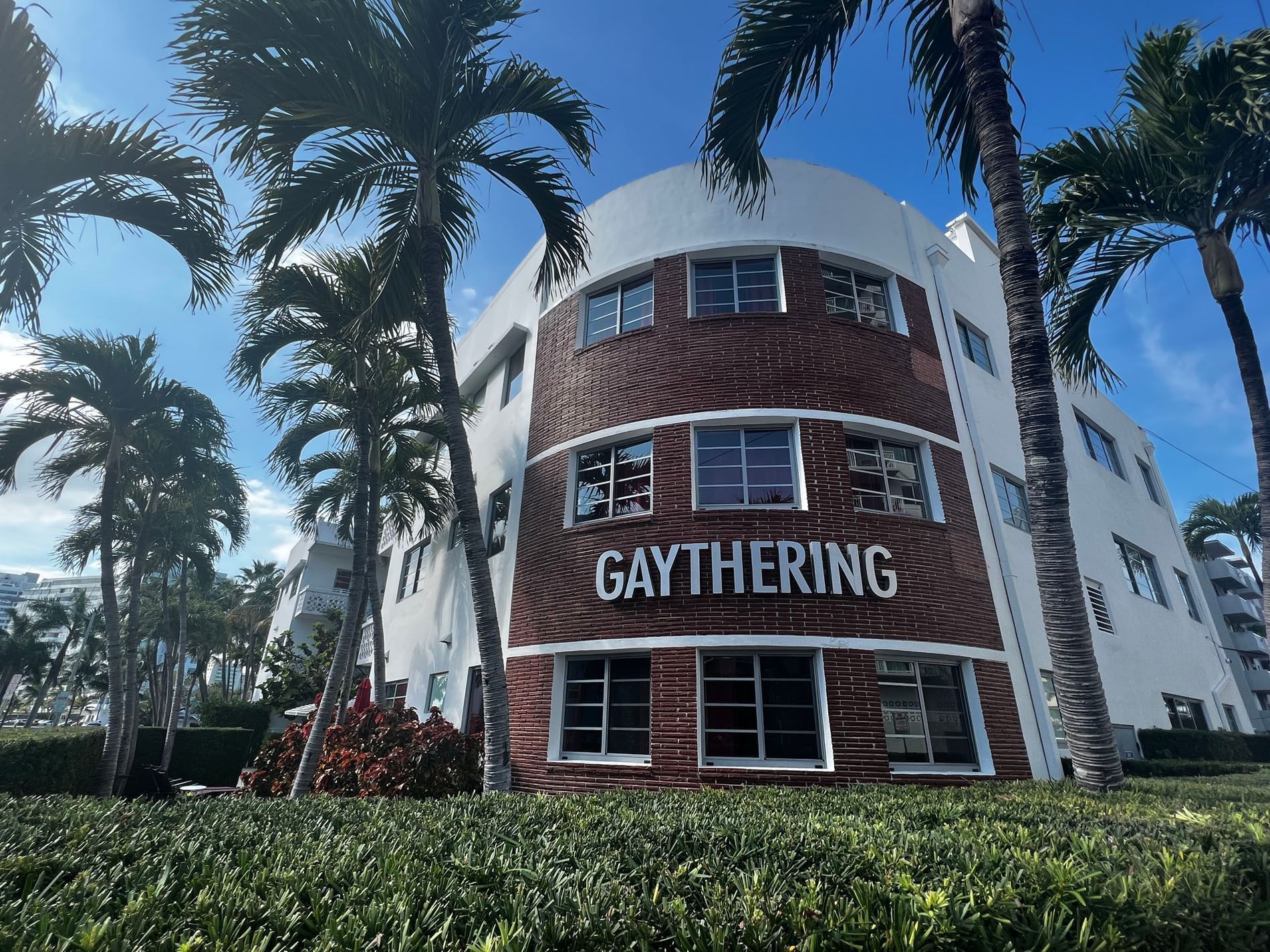
Hotel Gaythering is a gay-owned-and-operated Miami Beach hotel that markets its accommodation to adults generally, with a lively gay social scene, bar and events.
Its separate wellness sauna is explicitly men-only, so access to the hotel and access to that facility must not be presented as the same thing.
Do not assume that access to the hotel, bar and sauna all follows the same policy. A traveller considering this property should ask how each relevant space operates, what the check-in procedure is and whether their expectations match the atmosphere. The property's LGBT+ identity alone cannot answer those questions.
Casa Cupula, Puerto Vallarta

Casa Cupula is a gay-owned boutique hotel above Puerto Vallarta's Zona Romántica. It describes its approach as welcoming everyone, with a more intimate, luxury-led setting, a pool club and access to local dining and nightlife. It may interest travellers who want a personal hotel atmosphere rather than a large resort.
Casa Cupula's own guest information distinguishes between its clothing-optional Pool Club and its main pool, where swimwear is required.
The Pool Club has different operating arrangements from the quieter pool area, and the hotel's 2026 events programme also lists men-only Friday pool events.
Ask which facilities and sessions will be open to you on your travel dates, whether day visitors attend and whether any entry restrictions apply.
These are practical booking questions, not assumptions about any guest's identity.
Ask about the pool club's current rules, privacy at reception and any room or service arrangements important to you. Its inclusive mission is encouraging, but should still be paired with property-specific confirmation. Our Puerto Vallarta destination guide can help you consider the neighbourhood and wider holiday.
| Property | Location | Official positioning | Style and atmosphere | Material facility consideration | Status of trans-specific verification |
|---|---|---|---|---|---|
| AxelBeach Maspalomas | Playa del Inglés, Gran Canaria, Spain | Axel LGBTQ+ focused adults-only accommodation | Lively social pool and parties near the Yumbo Centre | Confirm chosen-name handling and the rules for changing and wellness areas | Property positioning verified; individual practices not independently confirmed |
| Hotel Gaythering | Miami Beach, Florida, USA | Gay-owned-and-operated hotel welcoming adult hotel guests | Social bar and events; separate men-only sauna | Hotel admission and sauna eligibility are different matters; ask the property for its exact policies | Men-only sauna verified by official website; trans-specific arrangements not independently confirmed |
| Casa Cupula | Puerto Vallarta, Jalisco, Mexico | Gay-owned boutique hotel with welcome-all messaging | Boutique hillside hotel; separate clothing-optional Pool Club with some men-only Friday events; swimwear-required main pool | Confirm event-specific eligibility, access to both pools, day visitors, privacy and check-in rules | Official positioning and pool rules verified; individual trans-specific arrangements not independently confirmed |
Remember that hotel policies, ownership, facilities and availability can change. These three are examples for research, not current offers or endorsements of every operating practice.
Booking Names, Passports and Hotel Check-In
Airline tickets, visas and border documents are not interchangeable with hotel guest records. For flights, follow the airline's documented name requirements and ensure your travel documents meet the rules of every country on the journey. Hotel registration requirements depend on the destination and property. Do not assume that a chosen name may replace a name needed for identification, or that every hotel globally requires the same documents.
For UK passport holders, HM Passport Office guidance says the name on a passport must match the name used to book travel. If you are changing your passport details, allow time to resolve them before buying flights.
A hotel's guest registration is a separate process, so ask the property which name it must hold officially and how staff can use your chosen name in person.
Do not assume a booking site's title or gender fields determine the hotel's legal registration requirements.
If the name you use differs from your passport or the card used to pay, contact the hotel before booking. Ask which details must appear on the formal reservation and whether reception can use your chosen name when speaking with you. You might request a neutral instruction such as, 'Please address this guest as Alex' without adding unnecessary information about your gender history.
Where possible, confirm the procedure with the property rather than relying solely on a general booking-platform message. Keep a copy of the reply and check whether all travellers' names, room arrangements and payment details are correct before paying the balance. Never alter travel-document details to make them fit a hotel's preferred form.
For travellers concerned about a quieter arrival or reduced uncertainty, our sensory-friendly LGBT+ holiday guide offers related planning ideas. Trans inclusion remains a separate hospitality and trust issue, even when a traveller has other needs too.
Pools, Spas and Changing Facilities: Check the Detail
A promise that the 'hotel welcomes everyone' does not establish how every shared facility operates. Some spas have gender-separated sessions. Some pools have shared facilities but separate changing rooms. Other properties offer private treatment rooms or individual cubicles. Opening hours and access conditions may differ between hotel guests and day visitors.
Ask about the exact space you hope to use, not just whether the hotel has a spa. Find out whether there are private changing options, whether a booking is required, whether the facilities are included in your rate and how staff deal with complaints. You can ask these things without disclosing personal medical information.
Policies may be shaped by local law as well as hotel management. Rights and rules are not identical across Britain, the United States, Spain, Mexico or other destinations. A hotel cannot promise to ignore the rules that apply locally. If an arrangement is essential, seek a clear written response about that property before you commit.
For context at home, the Equality Act 2010 protects people with the protected characteristic of gender reassignment against unlawful discrimination in services in Great Britain.
The law also contains specific provisions for separate-sex and single-sex services. The UK Supreme Court's April 2025 decision held that references to sex in the Act mean biological sex, while confirming that trans people retain gender reassignment discrimination protection.
This does not decide what access rules apply at a hotel overseas. Check the destination's laws and the property's written arrangements rather than assuming that UK rules apply abroad.
The Equality and Human Rights Commission's guidance explains the relevant protection and its qualifications.
Think Beyond the Hotel: Destination, Neighbourhood and Journey
A hotel can provide excellent service while the surrounding area presents different practical considerations. Look at the route from the airport, the neighbourhood you will return to after dark, and whether restaurants or excursion providers fit your priorities. The atmosphere of an established LGBT+ district may differ from that of a remote resort zone.
The UK Foreign, Commonwealth & Development Office's LGBT+ foreign travel advice recommends checking local laws and social attitudes, including rules affecting gender identity and expression. It also notes that conditions can differ between cities and rural areas. Read the individual country's current travel advice as well, including entry and documentation requirements.
Legal protection and everyday social acceptance are related but not identical. A popular gay destination is not automatically the right destination for every trans traveller, nor is a specialist hotel proof that all surrounding businesses share its approach. Our practical LGBT+ travel safety tips cover the wider planning questions without turning this hotel guide into a general risk checklist.
Different Travellers May Need Different Answers
Someone travelling alone may prioritise a discreet arrival, reliable transport and a manager they can contact. A couple may want a double bed confirmed without assumptions about their relationship. Friends sharing rooms may have specific privacy requirements. A non-binary guest may want to understand how a booking form handles titles and gender markers.
An older traveller might value quiet evenings and straightforward facilities, while another person wants the hotel bar to be the centre of their holiday. Trans travellers are not one uniform group, and no one should have to select a busy gay venue to receive courteous service. Think about your own essentials first, then compare hotels against them.
How to Compare Hotels and Read Their Replies
Start with a shortlist of two or three realistic properties. Compare more than their headline rates: location, the full room cost, taxes or local charges, deposits, cancellation deadlines, room configuration, facilities and transport all affect the stay. Check what is included in the advertised rate and whether a non-refundable offer is worth the loss of flexibility.
Give each hotel a short list of requirements labelled essential, preferred or optional. If the hotel confirms an essential point specifically and in writing, that is useful evidence. If it replies, 'We welcome all guests', thank them and repeat the question more precisely. If two employees contradict each other, ask a duty manager to clarify before paying.
An unanswered question is not always proof of discrimination. It may simply mean central reservations does not know the local procedure. What matters is whether the property can resolve the uncertainty in a reasonable way. If a crucial facility cannot meet your requirements, choose an alternative rather than hoping the situation will change once you arrive.
What a Useful Hotel Reply Looks Like
These examples are illustrative, not quotations from real hotels.
A specific, useful response
"Please enter the name shown on your identification for the official reservation. We can also record the name you prefer staff to use, and our reception manager will confirm how the note is shared."
This addresses both registration and everyday courtesy. The next step is to confirm whether the same arrangement will apply when you check in.
A friendly but incomplete response
"We welcome everyone and have never had a problem."
The tone is positive, but the hotel has not answered a question about a particular facility or procedure.
Reply with one clear follow-up, such as: "Could you confirm whether the spa has private changing cubicles?"
A response that reveals an important restriction
"The hotel welcomes all adult guests, but the spa has separate entry rules and cannot confirm your requested access."
This is important information, even if it is disappointing. Ask for the written facility rules and decide whether another hotel would suit you better.
A warning sign is not simply an unanswered first email. It is a repeated refusal to clarify a material request, contradictory explanations without a manager's decision, or pressure to book before an essential arrangement has been confirmed.
| Response received | What it means | What to do |
|---|---|---|
| Specific policy and named confirmation in writing | Useful property-level evidence, not a guarantee | Keep the reply with the booking and confirm again near arrival |
| General statement saying everyone is welcome | Positive tone but does not answer the practical request | Ask one clear follow-up about the named concern |
| Reply conflicts with website or another employee | Unclear operating practice | Request a duty manager written answer before paying |
| Facility unavailable or access rule does not meet needs | Material mismatch | Seek another hotel or decide with full information |
| Refusal to clarify an important question | Insufficient confidence | Compare alternative properties and cancellation rules |
A Simple Email to Send Before You Book
You can adapt this message without revealing any more personal information than you want to share:
Hello, I am considering a stay at your hotel on [dates]. Before booking, could you confirm [the specific arrangement or facility that matters to me]? I would also like to know which name needs to appear on the booking for identification and whether your team can address me as [name] during my stay. If relevant, please explain the current policy for [pool, spa or changing facility]. Could a manager confirm these points by email? Thank you, [name].
A brief email with two or three focused questions often gets a better answer than a long personal explanation. If your plans change, check whether the original confirmation still applies to the new room, dates or facilities.
If you prefer to telephone, keep the conversation short:
"Before I make a reservation, could I speak to whoever can confirm your check-in and facilities policies? I have a couple of practical questions. Would you be able to email me the agreed arrangements afterwards?"
That gives the hotel an opportunity to refer the enquiry to the right person and leaves you with something written to retain.
If Something Goes Wrong During Your Stay
If someone behaves aggressively or you feel unsafe, move to a safer place and seek immediate help where needed. For a service problem, explain what happened to the duty manager, refer to the relevant written confirmation and ask what can be done now. Record the time, name and response if it is safe and appropriate to do so.
Contact your travel organiser or booking provider promptly if the hotel cannot resolve an important issue. Ask for a written explanation of proposed remedies and check the booking terms before accepting a change. Refunds, alternative accommodation and complaints rights depend on the contract and applicable law. A specialist travel adviser can help you understand whom to contact, but cannot guarantee a particular outcome.
Booking Protection and Who Looks After Your Holiday
Choosing a suitable hotel is one part of booking well. You should also know who your contract is with, what is included, when you must pay and which financial protection applies. Wide Awake Holidays is a specialist trading brand of Wake Enterprises Limited. Its online booking facility is powered by the sister brand Jamie Wake Travel; that does not mean Jamie Wake Travel administers Wide Awake Holidays' specialist holiday service.
Wide Awake Holidays is a member of Protected Trust Services. ATOL protection applies to eligible flight-inclusive bookings, and an ATOL Certificate should be supplied when applicable. Supplier Failure Insurance or Scheduled Airline Failure Insurance may form part of eligible tailor-made arrangements. The precise protection depends on how the holiday is booked and which services are included; it should be explained before you confirm. Do not assume that every individual hotel booking or travel service has the same cover.
For an overview of our approach to planning and the booking questions we can help with, visit our specialist gay travel agency guide.
Jamie Says:
"I would rather get one specific question answered before a holiday is booked than leave a traveller hoping a hotel will understand when they arrive. A friendly label is helpful, but a clear written answer about the things that matter to you is much more useful."
Jamie Wake

Frequently Asked Questions About Trans-Friendly Hotels
What makes a hotel genuinely trans-friendly?
Look for explicit inclusive policies, respectful guest communication, staff who understand their responsibilities and clear answers about check-in and facilities. The strongest indication is a useful written response from the particular property, not simply a logo.
Are all LGBT+-friendly hotels suitable for transgender guests?
No label guarantees an identical experience for everyone. Some gay-focused properties have restrictions on certain facilities. Ask about your particular requirements, especially names, privacy and gender-separated amenities.
Can I book a hotel using my chosen name?
Some hotels can record a chosen name for everyday communication while requiring another name for registration or identification. The rules differ by destination and hotel. Ask what must match your ID before confirming.
What if my hotel booking name differs from my passport?
Contact the hotel before travel to confirm the registration procedure. Keep flight documents compliant with the airline's requirements and ask hotel staff to handle any name difference discreetly.
Does a Travel Proud badge guarantee a trans-inclusive hotel stay?
No. It indicates participation in an inclusive hospitality training programme and commitment to supporting materials. It does not guarantee a particular outcome or answer every question about an individual hotel's facilities.
How can I check whether hotel staff are trained to welcome trans guests?
Ask whether reception, housekeeping, security and leisure staff have received relevant training, rather than whether the hotel merely has an inclusion badge.
Request a named contact who can explain how your particular booking needs will be handled. Travel Proud participation alone does not establish that all staff have completed training.
Is IGLTA membership the same as IGLTA Accredited?
No. Membership is participation in a travel business network. IGLTA Accredited is a separate programme involving an eight-criteria property assessment. Neither removes the need to check your specific booking requirements.
Can trans guests use hotel spas and changing rooms?
Access arrangements depend on the venue and applicable local rules. Ask for the current property-specific policy and whether private alternatives exist. Do not assume a hotel badge resolves every facility question.
Should I choose a gay-only hotel rather than a mainstream hotel?
Choose the property that answers your needs and offers the atmosphere you enjoy. A specialist gay hotel may be very social or restrict some spaces; a mainstream hotel may offer excellent service and privacy. Verify the details in either case.
What should I do if I experience discrimination at a hotel?
Prioritise safety, raise the issue with a duty manager and retain relevant booking confirmations. Contact the organiser or booking provider if the problem is unresolved. Any remedy depends on your circumstances, contract and local law.
Plan a Stay That Feels Right for You
You should not have to guess whether the hotel you've chosen understands an important part of your stay. Wide Awake Holidays can help you compare LGBT+-focused and mainstream accommodation, ask specific questions and build a holiday around the atmosphere, budget and practical arrangements you want.
We work with a wide range of travel suppliers and tour operators, and can explore tailor-made flights, accommodation, transfers and experiences where suitable. No hotel can promise that every interaction will be perfect. Our role is to help you make an informed choice and know which details have been confirmed before you book.
Call 01495 400947 or send us your holiday enquiry. Tell us only what you feel comfortable sharing, and we can start with the particular questions that matter to your trip.
About Jamie Wake
Jamie Wake is the founder of Wide Awake Holidays and Jamie Wake Travel, helping UK travellers plan inclusive holidays where they can feel genuinely welcome, comfortable and confident.
Jamie combines personal experience with professional travel-industry knowledge to help travellers compare destinations, hotels, resorts and holiday experiences more carefully. His approach looks beyond labels such as “gay-friendly” to consider how inclusive and welcoming a destination or property is likely to feel in practice.
Through Wide Awake Holidays, Jamie shares practical, honest guidance about LGBTQ+ travel, inclusive destinations and choosing holidays that suit each traveller - not simply the option with a rainbow in its marketing.
Some of our Latest Offers
Discover our latest hand-picked travel offers below – automatically updated and inspired by the destinations featured in this blog.